What to do if pomegranate doesn't bloom? Let me teach you methods to promote flowering
Pomegranate is a very popular fruit. Pomegranates have a very high sugar content, have relatively large market demand, and are also very rich in nutrients. At present, the pomegranate planting area in our country is also relatively large. When planting pomegranates, sometimes the flowering rate of pomegranates is found to be very low. So how should we manage them to promote more pomegranate flowers? Below, the editor will briefly introduce this to everyone. Let's take a look together!
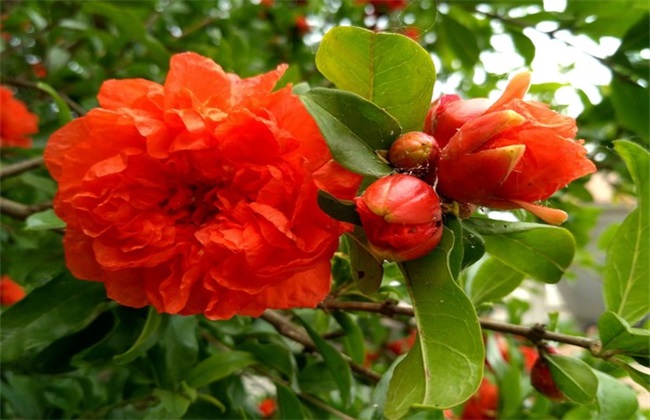
1. Light
Pomegranate is a tropical fruit and likes to grow in places with sufficient sunlight, with strong tolerance to high temperatures. Therefore, when planting pomegranates, shading is generally not needed. During the growth period, it is also necessary to ensure sufficient light. In summer, it can also be placed in the sun to dry, so that the flowering rate and flower quality will be improved a lot. Many people often shade pomegranate trees when planting pomegranates, but in fact this is very unfavorable to the growth of pomegranates. If there is insufficient light during the pomegranate growth period, it is very easy to cause excessive growth of branches and leaves, and the flowering rate will naturally decrease as a result.
2. Water
Pomegranate likes to grow in moist soil, but its tolerance to waterlogging is very poor. Therefore, when planting pomegranates, we must not only keep the soil moisture sufficient, but also avoid water accumulation in the soil. In summer, it generally needs to be watered once a day. In autumn, when the temperature is lower, it can be watered once every two days. However, after entering the flowering and fruiting period, the amount of watering should be controlled, and watering should be carried out only when the branches and leaves show slight wilting. If the soil is too dry, bud drop and dried fruit are likely to occur, which is also the main reason affecting flowering.
3. Fertilizer
Pomegranate growth has a very large demand for fertilizer, and sufficient base fertilizer must be applied to pomegranates every year. The base fertilizer is mainly fully decomposed farmyard manure, and during the pomegranate growth period of that year, a thin liquid fertilizer is applied once a month. Then in the growth season of the second year, it is applied about once every half a month. Before the pomegranate buds, sufficient phosphorus fertilizer should be applied to increase the flowering rate. After entering the flowering period, the amount of topdressing should be reduced, and after flowering, some phosphorus and potassium fertilizer can be applied. This promotes fruit development, but attention must be paid to controlling the amount and frequency of fertilization. Especially for nitrogen fertilizer, it should not be applied excessively, otherwise it is easy to cause excessive growth and reduce the flowering rate.
4. Pruning
When planting pomegranates, pay attention to cutting off some dense branches and old and weak branches, so that nutrients are concentrated on robust branches. This promotes branch flowering and improves the brightness of the flowers, and the yield and quality of the fruit will also be improved as a result. If pomegranates do not bloom, then we need to promote flower bud development. Begin the necessary pruning work and remove the terminal buds at the tips of the branches. This can not only avoid excessive growth of the plant, but also promote the growth of new side branches, and the flowering rate will also increase as a result.
The above is a brief introduction to how to promote pomegranate flowering. That is all for today's introduction. This article is for reference only, and I hope it can be helpful to everyone.