What are the key points for autumn management of kiwifruit orchards?
August to September is a critical period for kiwifruit quality formation, and at this time growers need to carry out good management measures so that the variety and yield of kiwifruit can be improved. So how should kiwifruit orchards be managed in autumn? Let's find out together.
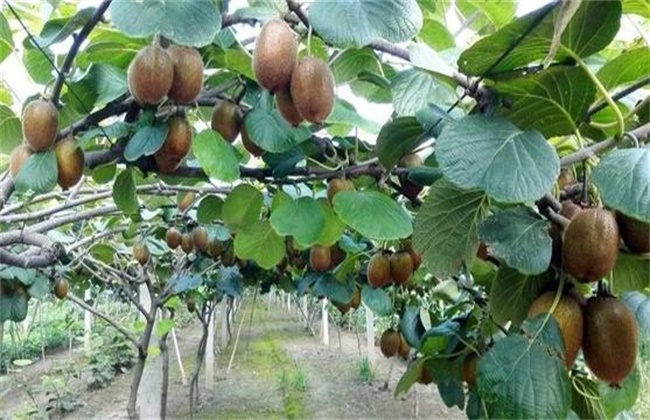
1. Branch and shoot pruning
After the Beginning of Autumn, growers should promptly prune the branches and shoots of overly dense orchards. The main purpose is to improve the orchard's ventilation and light penetration and photosynthetic efficiency, increase the leaf area available for photosynthesis, enhance fruit coloring, and improve fruit quality. At the same time, parasitic branches and twining branches should also be thinned out to keep the light distribution under the trellis uniform. In addition, pruning should be done with restraint and not too heavily, so as not to affect photosynthetic efficiency or cause fruit sunburn.
2. Water management
After autumn, temperatures gradually turn cooler, and it is also a season when rainfall is relatively concentrated, so drainage in the orchard is especially important. Growers should check the orchard for water accumulation at any time, clear the ditches of standing water, and reduce damage to the root system from water accumulation, high temperatures, and excessive moisture. Especially in early autumn, if the temperature reaches above 35 degrees, the dry hot wind produced by the dry climate often causes kiwifruit leaf margins to wither and curl upward, and the fruit will also be scalded, so during high temperature and drought, watering should be done promptly to preserve moisture and lower the temperature.
3. Weeding
After entering the rainy season, rainfall is concentrated, and ample water will cause a large amount of weeds to grow. Therefore, growers should promptly control the weeds in the orchard, weed at the right time, increase ventilation and light penetration, reduce humidity, and lower the probability of pest and disease outbreaks. The cut weeds can be used to mulch the tree disks; after they rot, they increase the orchard's organic matter, improve the soil's granular structure, and increase the soil's water- and fertilizer-holding capacity.
4. Pest and disease control
After the Beginning of Autumn is also a period of high incidence of kiwifruit pests and diseases. The main pests and diseases include soft rot, gray mold, stink bugs, leafhoppers, and so on. If not controlled in time, they will not only cause leaf drop and fruit drop, but also cause the fruit to develop diseases during harvest and storage. Therefore, the right remedy should be applied according to the occurrence of pests and diseases. According to the condition, use triazole fungicides, 80% thiophanate-methyl wettable powder 1000 times solution, procymidone and other agents for control. For insect pests, cyhalothrin 1500 times solution or beta-cypermethrin 1500 times solution can be used alternately to prevent resistance.
The above are the key points for autumn management of kiwifruit orchards. We hope it can help you. To learn more related knowledge, please follow us.