A Detailed Guide to Apple Tree Fertilization Timing and Methods
After apple trees are planted, they are cultivated for many years. In the first few years, they are young trees, and afterward they bear fruit for many more years. Therefore, fertilization is needed throughout their growth to ensure nutrition and maintain a consistently good tree vigor. There are various fertilizers to choose from, the fertilization timing should follow the growth stages, and the fertilization method should also be chosen appropriately, favoring methods that aid absorption. So next, the specific details of these aspects will be introduced.
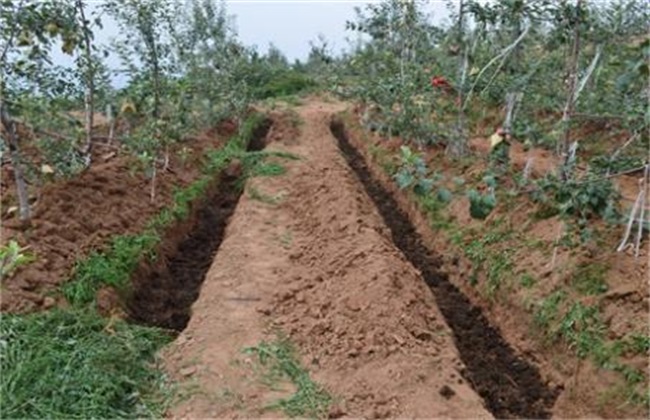
1. Base fertilizer
Base fertilizer is mainly farmyard manure, applied in one go according to its proportion of the total annual fertilizer amount, and is generally applied after being composted together with phosphate fertilizer. Base fertilizer is applied after fruit harvest and before leaf fall. This allows timely absorption, restores the nutrients consumed by fruiting, and prepares for sprouting the following spring. Apply it in the root hair distribution zone, mainly under the tree, using ring-shaped fertilization, or square trench fertilization, or fertilization along the tree canopy.
2. Foliar spraying fertilizer
For fertilization before flowering or during the flowering and fruiting stages, the foliar spraying method can be chosen, generally carried out on cloudy days or in the afternoon of sunny days, and never under strong light. Generally, urea can be sprayed at a concentration of 0.3%, potassium sulfate at a concentration of 0.2%, and superphosphate at a concentration of 0.5%. Some boron can be supplemented by spraying borax, along with other elements. This is mainly a supplementary fertilization; root fertilization is still needed, combining chemical fertilizer and farmyard manure, with strip trench fertilization.
3. Root growth
Fertilization can be done at the peak of root growth. Generally, roots have three growth peaks: one from mid-March to mid-April, mainly applying nitrogen fertilizer to promote new shoot growth, and also supplementing phosphate fertilizer; the earlier phosphate fertilizer is applied, the better it is utilized. One from the end of May to mid-June, mainly applying potassium fertilizer. As July approaches, the fruit needs potassium fertilizer, and both coloring and sweetness depend on potassium fertilizer. One from mid-September to November. At this time, mainly apply composted farmyard manure to promote root growth.
4. Fertilization methods
Generally, base fertilizer requires ring trench application, so it can be absorbed and utilized from the roots. However, for topdressing before flowering, during the flowering stage, and during the fruiting stage, strip trench fertilization is used, which is convenient and fast and absorbs evenly. Water and fertilizer can also be combined, for example by laying pipes, dissolving fertilizer in water, and fertilizing through drip irrigation. It can be added freely. This way, the root hairs and soil structure are not damaged.
For apple tree fertilization, the timing follows the growth stages, and the methods include root fertilization and foliar topdressing. For root topdressing, there are also many methods to choose from. The above is a brief introduction to apple tree fertilization and fertilization methods.