How to graft nectarines? Master these little tips
The nectarine is actually a variant of the common peach, so it is grafted onto common peach trees, and generally a plum tree is used as the rootstock. Common peach branches are used as the scion, and after grafting this way, nectarines will grow. So what exactly is the grafting method, what are the key points to note, and how should it be managed and maintained? Let us now take a look together at the specific little grafting methods.
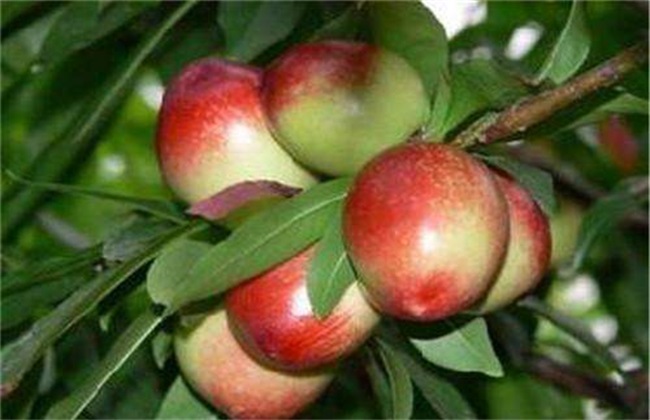
1. Preparatory work
Select peach trees with pure, unmixed varieties, and take branches from robust peach trees as scions. Collect upper and outer branches free of pests and diseases as scions. After the scions are cut, they must be stored in sand to keep them fresh, or for transport. Select saplings with a thickness of about 0.5 cm as rootstocks, and they need to be about 30 cm tall. The rootstocks must also be healthy saplings free of pests and diseases.
2. Grafting methods
Bud grafting is carried out in August. First remove all the sprouts within 15 cm of the base of the rootstock to avoid them competing for the nutrients of the grafted bud. This improves the survival rate. T-shaped bud grafting. Cut a T-shaped incision on the rootstock, with the cut depth reaching the green layer, make a slanted cut on the scion to take a bud, then insert it into the rootstock incision, tie and wrap the incision, and expose the bud. The cut grafting method is to cut the rootstock directly at the two-thirds cross-section, about 1.3 cm. Leave a few buds on the scion, slant-cut the lower end into a 2 cm cut surface, cut the back side into a 1 cm cut surface, then insert it into the rootstock and align the cambium. Tie and wrap it and it is done.
3. Care and management
Newly grafted buds have poor overwintering ability, so if grafting is done in autumn, the binding may be left untied to help it overwinter, and before winter it can also be watered to keep warm and prevent cold damage. In spring, cut the rootstock, and afterward begin untying. After cutting the rootstock, sprouts will emerge, so these sprouts must be removed in time to ensure the growth of the grafted bud. In summer, begin watering and fertilizing together. Fertilize one mu of land with 20 jin of urea and 30 jin of phosphate fertilizer. In summer, focus on controlling aphids.
4. Sapling pruning
After the grafted bud grows into a plant, clear away the secondary shoots at the base of the plant after autumn begins. In September, the tender shoots that continue growing can be removed. Plant grafted saplings more sparsely, widening the row spacing, so it is easy to lift the saplings with soil. When grafted saplings are half a meter tall, pinch the tips. After there are several branches, keep the main branches, pinch the tips of the main branches, and remove the other branches.
The nectarine is a variety produced after grafting onto common peach trees. There are many grafting methods, and bud grafting and cut grafting are mainly introduced. What is very important in grafting is preparation and post-grafting care, both of which are key tasks that determine the survival rate.