Why do strawberry leaves become brittle? Causes and solutions
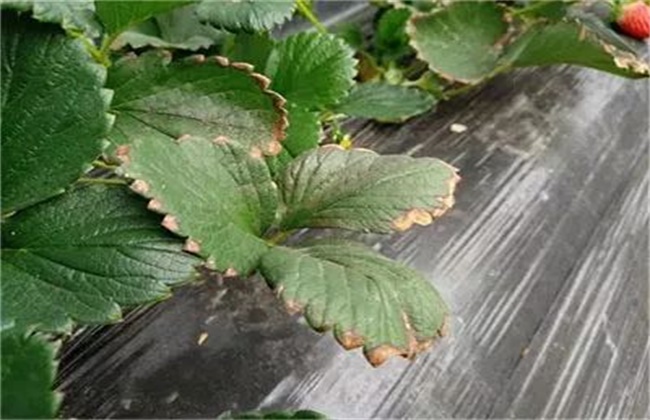
Many fruit growers encounter the phenomenon of brittle leaves when growing strawberries. Brittle strawberry leaves are not a minor problem; they are very likely a sign of a problem with root absorption, which is extremely detrimental to strawberry growth, and can also be caused by soil that is too dry or too wet. Below, the editor summarizes the causes of brittle strawberry leaves. Let's take a look.
1. Improper watering
Insufficient water supply to the plot, or going a long time without watering, will cause the strawberry plants to lack water, making the leaves dry out and become brittle. When the plot is over-watered, it will also cause excessive growth of stems and leaves, with vegetative growth stronger than reproductive growth, resulting in fewer flowers and fruits, small fruits and low yield; because the fruit absorbs too much water, the sugar concentration is also reduced, affecting the fruit's commercial value. In addition, strawberry seedlings are not tolerant of waterlogging. If water accumulates for a long time, it will cause root suffocation and root rot, so the roots cannot absorb water normally, which leads to wilting and drying symptoms on the aboveground leaves.
Solution: When watering, pay attention to watering little but often, and keep soil moisture at around 60%. This is also the state where soil forms a ball when squeezed by hand but no water can be squeezed out, and when dropped from waist height it breaks apart; the soil water content is then equivalent to between 60-80%.
2. Temperature factors
Low temperatures affect the roots' absorption of mineral nutrients, very easily causing the leaves to droop, wilt and grow slowly, accompanied by leaves becoming brittle. Under high temperature and drought, the closure of strawberry leaf stomata will likewise cause the leaves to become brittle.
Solution: For greenhouse cultivation in the north, the temperature inside the facility can be lowered by ventilation. Keep the daytime temperature at 20-25°C and the nighttime low temperature at 6-8°C. The low nighttime temperature can reduce plant nutrient consumption and avoid excessive growth of strawberry stems and leaves. During the fruit-harvesting period, root nutrients are extremely important. When topdressing, you can combine 150-300 times Qingkulike plus 300 times Diliwang, or add humic acid fertilizer to nourish and protect the roots. Pay attention to the amount of plant growth regulators used, so as to avoid premature root senescence and effects on yield.
3. Improper fertilizing and pesticide application
When boron supply is insufficient, a large amount of carbohydrate compounds accumulates in the leaves, making the leaves thicker and brittle; it also reduces pollination and fruit-setting rates, leading to deformed fruit. Calcium deficiency also often causes the leaf tips and leaf margins to turn brown and dry up, young leaves to become brittle, and small leaves to be unable to grow normally after unfolding. When applying pesticides, using too much or too high a concentration can also cause leaf aging and brittleness. For example, applying too many azole-type fungicides can easily lead to this situation.
Solution: When fertilizing, pay attention to the supply of trace elements. When applying pesticides, this can be done together with foliar fertilizer spraying to appropriately maintain the calcium, boron and other medium and trace elements needed for plant growth.
The above is an introduction to the causes of brittle strawberry leaves and solutions. We hope it can help you. To learn more related knowledge, please stay tuned to us.