What is the best foliar fertilizer for citrus? A detailed explanation of spraying precautions
Citrus is grown over a long period, and during the cultivation and management process, nutrient deficiency symptoms often appear easily. Applying fertilizer directly to the soil takes effect very slowly, while foliar spraying can often improve the yellowing of leaves caused by nutrient deficiency as quickly as possible. Therefore, foliar spraying is very common. So what exactly is sprayed in general foliar spraying, and what should be noted throughout the entire spraying process. This is what we are going to introduce now.
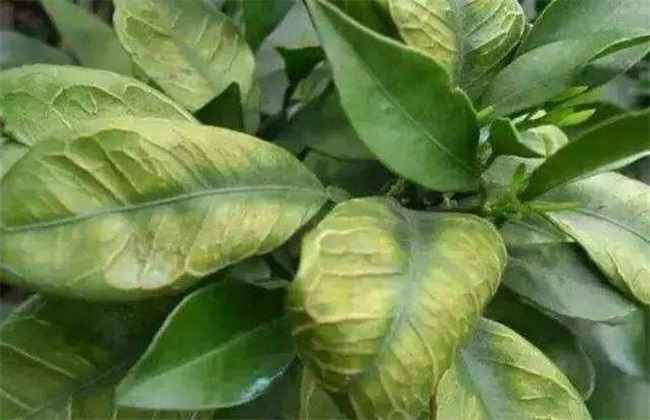
1. Suitable fertilizers
Citrus is prone to calcium deficiency and boron deficiency. When these two elements are lacking, the fruit does not produce enough calcium pectate, which may lead to fruit cracking and affect fruit quality. Therefore, 0.1% borax and 1% superphosphate can be sprayed. Before flowering, to increase the flowering rate, a mixed solution of 0.5% urea, 2% superphosphate, and 2% potassium sulfate needs to be sprayed. Spraying 0.4% urea and 0.2% potassium dihydrogen phosphate can reduce fruit drop. Spraying 0.3% urea, 3% superphosphate, and 0.5%-1% potassium sulfate is mainly for fruit enlargement.
2. Fertilizer concentration
When using foliar fertilizer, be sure to use the appropriate concentration. Do not use too high a concentration, as high concentration will damage the leaves and cause yellow leaves, and then the fertilizer also cannot be absorbed. If the concentration is too low, the plant's absorption effect will be poor, so the appropriate spraying concentration should be adjusted according to the fertilizer.
3. Spraying time
Generally, in different growth cycles, the fertilizer requirements are different. During the fruit growth period, calcium and boron need to be supplemented, while in other periods other fertilizers are needed for other purposes. Generally, the specific spraying time is on cloudy days or in relatively humid mornings. Or in the evening. When humidity is high, there is no direct sunlight, and the temperature is cool, spraying fertilizer is easy to absorb and does not damage the leaves.
4. Spraying parts
Foliar spraying is generally done on the underside of the leaves, because the underside of the leaves has no cuticle and is easy to absorb. The upper side of the leaves has a cuticle, so absorption is relatively not as good. In addition, the stomata are on the underside of the leaves, making absorption very easy, and the stems can also be sprayed. It can also be combined with root fertilization, and the effect is relatively good.
The main things sprayed as foliar fertilizer on citrus are various chemical fertilizers, such as urea and potassium dihydrogen phosphate. Attention must be paid to the spraying concentration, spraying on the appropriate parts, and choosing the appropriate time to spray.