How many years does it take for salak (snake fruit) to bear fruit after planting?
Salak is a fruit with strict regional limitations. It is a plant of the palm family (Arecaceae). Its fruit is delicious and rich in nutrients, and it is very popular in Southeast Asia, where it is a famous fruit. At present, a small amount is grown in South China. It is a tropical fruit. Growing salak generally takes several years of cultivation before the plant bears fruit. Some people in areas with suitable conditions want to understand this question, so let us take a look now.
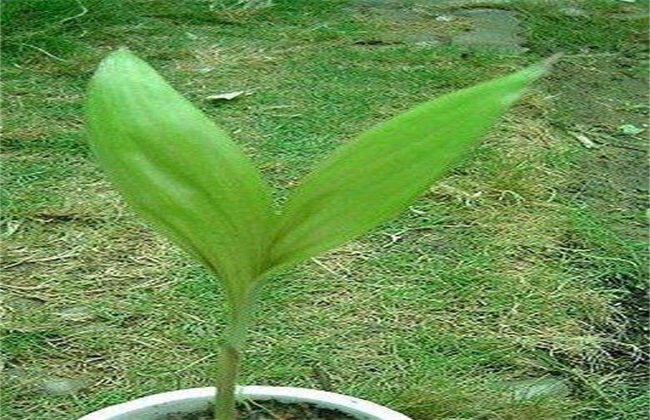
1. Fruiting time
Generally, when salak is planted, it can bear fruit about two to three years after planting, but the yield is unstable. After 3 to 4 years of planting, fruiting becomes relatively stable, at about 20 jin per tree per year. In the rainy season the yield is about 12 jin, and in the dry season the yield is about 8 jin. Added together over a year, it is about 20 jin. So basically it can bear fruit after two years, and you can begin to recover your investment.
2. Raising seedlings
For sucker propagation by division, take strong suckers from the mother plant, first put on a plastic sleeve, fill it with soil, and then wait a few months until the suckers have grown roots before cutting them off. Continue cultivating them in containers, cut off half the leaves, and plant them in a basket made of bamboo, which allows air circulation. They need to be covered with thin mud and shaded for cultivation. For seed propagation, sow the seeds in a sand bed, and after they sprout, place them in plastic pots to raise the seedlings. When they have grown to a certain extent, transplant them.
3. Transplanting
Generally, the plant spacing for transplanting and establishing the plants is 1.5 m, and the row spacing is 2 m or also 1.5 m. The plant and row spacing can be adjusted appropriately, and the planting density can also be adjusted. After plowing the whole orchard, dig holes and plant. Generally, the hole depth is half a meter, and both the width and length are half a meter, though this can also be adjusted according to the size of the tree. For normal planting, long-term maintenance and management are required after planting.
4. Management and maintenance
For nutritional and nutrient requirements, fertilizer is generally applied twice a year, about 3 to 4 jin per tree each time. Apply fertilizer once in the rainy season and once in the dry season, both during the fruiting period. Generally, compound fertilizer is used, and the proportions of nitrogen, phosphorus and potassium in the compound fertilizer are the same, for balanced fertilization. Generally, trace element fertilizers do not need to be used. Farmyard manure can be applied, as its fertilizer effect is comprehensive, or chemical fertilizers can be applied strictly according to the formula.
Salak generally bears fruit after two years of planting, but it takes several years before fruiting becomes stable. Generally, from seedling raising onward, there can be two choices for planting. How early or late fruiting occurs is also related to the management and care during cultivation.