A Detailed Guide to Passion Fruit Planting Techniques and Management Methods
Passion fruit, also known as egg fruit, has been a very popular fruit in recent years and is in demand all over China. Passion fruit is a herbaceous vine and is mainly grown in the tropical regions of China. Passion fruit can be eaten as a fruit and also has significant medicinal value. So how do you grow passion fruit? And how should field management be carried out after planting? Below, the editor will give you a brief introduction. Let's take a look!
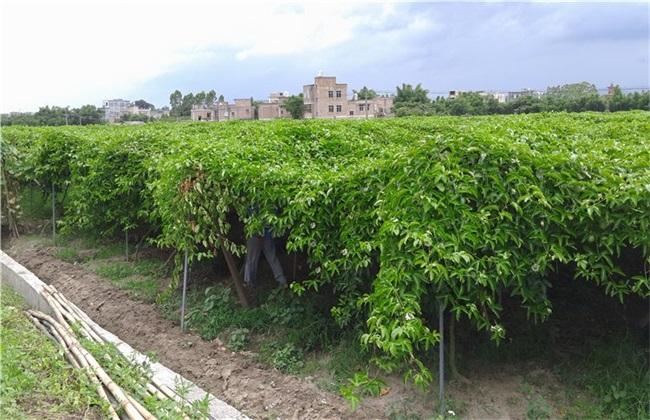
1. Site Selection and Orchard Establishment
Passion fruit has fairly strong adaptability to soil, but when planting, it is still recommended to choose a sheltered gentle slope with ample sunlight, with sandy soil as the main soil type. It is enough to ensure the soil is rich in humus, has normal drainage and irrigation, and has a deep soil layer. Because passion fruit is a trailing plant, after choosing the site we also need to do a good job of trellising. The trellis can be made of wood, iron, or cement posts, with the height controlled at around 2 m, and the plant and row spacing maintained at 2.5 m * 3.5 m. Dig the planting holes well, and the specification of the planting holes can be maintained at 70 cm in length, width, and depth.
2. Propagation Methods
The propagation method for passion fruit is generally mainly seed propagation. First, we should select robust fruit trees free of pests and diseases and with uniformly mature fruit as mother trees for collection. After the fruit is fully mature, pick it, then leave it for a period to undergo after-ripening, then take out the seeds, wash off the mucilage, and store them after drying, ready for sowing. Passion fruit sowing is mainly based on raising seedlings and then transplanting, generally carried out from March to May, with the sowing rate per mu maintained at around 0.6 kg. Before sowing, soak the seeds in water for a whole day, then use agents such as carbendazim to soak the seeds, disinfect the seeds, and improve the germination rate. Then do a good job of promoting germination. After about 80% of the seeds have sprouted white, they can be sown. After sowing, cover with soil and water, and wait for the seedlings to emerge.
3. Timely Field Planting
After the seedlings emerge, do a good job of pest and disease prevention and control, and water reasonably according to the soil moisture condition. When the seedlings grow about 3 true leaves, carry out thinning. Then carry out field planting at the appropriate time according to the height of the seedlings. Generally, field planting can begin when the seedlings grow to about 25 cm, and in places with good watering conditions, the field planting time can be earlier. If the water source is insufficient, then it is best to carry out field planting during a period with sufficient rain. After field planting, pay attention to keeping the soil moist, watering about once every half a month. When field planting, pay attention to maintaining good plant and row spacing, controlled at around 2-2.5 m.
4. Field Management
Passion fruit likes to grow in a moist environment, and its tolerance to waterlogging and drought is very poor. When there is standing water, drain it in time, and when there is a water shortage, do a good job of watering. Especially during the fruiting period, the water requirement becomes greater, so increase the amount of watering. In the early stage of passion fruit growth, fertilization should mainly be nitrogen fertilizer, applied once every half a month per plant, mainly urea, peanut bran, or farmyard manure, with 15 kg applied per plant. Then, as the passion fruit seedlings grow, appropriately increase the fertilization amount, and spray it together with foliar fertilizer. After entering the production period, increase the proportion of phosphorus and potassium fertilizer to promote flower bud differentiation. Then do a good job of pruning to improve the tree's ventilation and light penetration, increase yield, and enhance quality.
The above is a brief introduction to how to grow passion fruit and the field management methods for passion fruit cultivation. This article is for reference only, and we hope it can help you!