How to grow pineapple leaves in water so they survive?
Pineapple is a common tropical fruit, and generally it can only complete its growth and development process when grown in tropical regions. Pineapples are usually grown in soil, and many people do not know that pineapples can actually be grown hydroponically. But it also has the same environmental condition restrictions as soil cultivation. So how exactly do you grow it hydroponically, and how should you do it? Let's continue reading the content below.
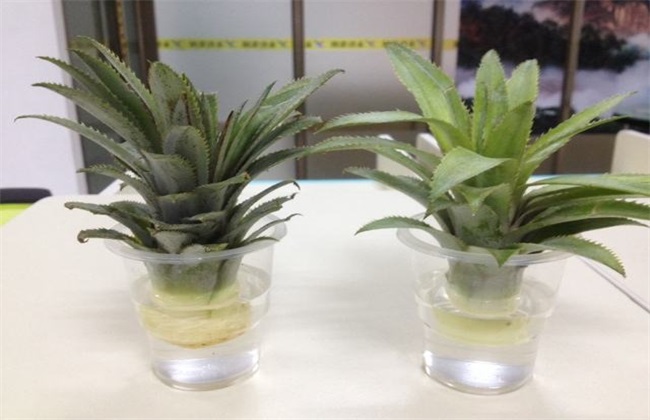
1. Hydroponic preparation
For hydroponics, you need to prepare a ripe, intact pineapple, cut off the fruit flesh, and leave the crown with the leaves, keeping a portion of the flesh, about 2 cm of flesh. Prepare a glass container, with an opening of about 5 cm and a depth of just over 10 cm, which is best. Also prepare a nutrient solution, just a little. You also need to prepare a clay pot for later transplanting into soil. You can also skip transplanting. But if you do not transplant it, growth will be very slow. The rotten leaves on the pineapple crown should be removed.
2. Hydroponic method
Remove the rotten leaves and tender leaves from the pineapple crown, then dry the cut wound in a cool, ventilated place. Only after there is no juice can it be soaked in water, otherwise it will easily rot. Adding an appropriate amount of nutrient solution to the water can promote root growth. The container must be cleaned thoroughly and used after disinfection. Note that only the fleshy part should touch the water surface; the leaves must not touch it, or they will rot.
3. Care and management
Generally, the culture water should be changed every two to three days, otherwise it will easily rot, but if you change it too frequently, it cannot take root. You can change it more often at the beginning. Later, you can change it less often; for example, after rooting, you can extend the time a little. You can decide by observing the specific growth situation. Roughly after the roots have grown in fully, you can transplant it into soil. This way it will grow and fruit faster. If you do not want it to fruit and only want it for ornamental purposes, you can skip transplanting.
4. Transplanting and cultivation
For transplanting, prepare a container and culture soil. The culture soil can be mixed with river sand, peat soil, and the like, and it also needs to be treated with a chemical for disinfection and sterilization. Clean and disinfect the container, lay a layer of soil on the bottom, put the pineapple in, keep the roots spread out, and gradually cover with soil. Cover with soil up to above the pot rim, press the soil gently and firmly, and after watering, the soil will settle to the pot rim. The rest is daily maintenance and management.
Hydroponic pineapple is a good way to make it root quickly; it roots faster than in soil and is not prone to rotting. Friends who need to understand the process of hydroponic pineapple can refer to the month's reading to learn about it.