Detailed Explanation of the Key Points of Red-fleshed Kiwifruit Training and Pruning Techniques
Red-fleshed kiwifruit is a variety of kiwifruit. What sets it apart from ordinary kiwifruit is that its flesh is red. However, its nutritional value is every bit as good as, if not better than, that of kiwifruit, and it also has strong stress resistance and relatively large fruit. There is now a certain area of cultivation. When growing red-fleshed kiwifruit, training and pruning are very important. So today, the editor brings you the training and pruning techniques for red-fleshed kiwifruit. Let's take a look below!
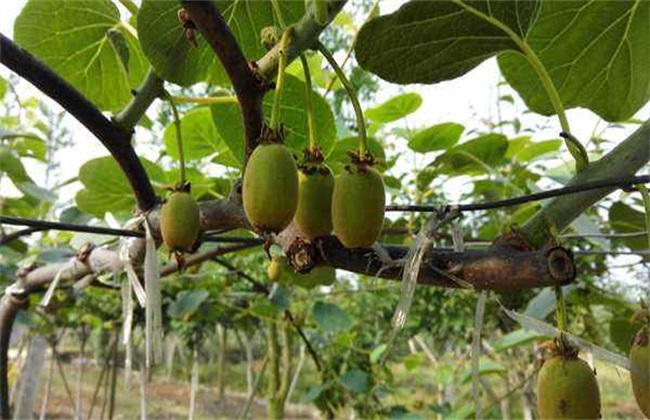
1. The first year after planting
One year after the red-fleshed kiwifruit is planted, insert a bamboo pole beside the plant. Then select the most robust-growing branch among the seedlings as the vine, tie the main vine to the trunk, and encourage the main vine to grow upright along the bamboo pole. Tie it at intervals of about 30cm to prevent wind damage. If the main vine becomes tangled, untie it promptly. For the new shoots that the red-fleshed kiwifruit sends out, they can be trained into auxiliary nourishing branches; if they grow vigorously, they should also be tied. Then remove the sprouting branches below the graft union. In summer, leggy growth occurs very easily, so prune it off promptly. Then in winter, keep about 3 buds on the main vine and remove all excess branches from the base.
2. Pruning in the second year
By the spring of the second year, select a vigorously growing new shoot from the plant's new shoots, tie it to the trunk, and let it grow upright. Also tie it at intervals of about 30cm. When the new shoots on the main vine gradually become thinner and the leaves become smaller, this indicates that growth has declined. At this point, pinch off the tips by removing several nodes so that the new shoots stop growing for a period and nutrient accumulation is increased. Then, when the new shoots grow to about 35cm beyond the trellis surface, guide them to grow toward the other side to encourage the formation of a new main vine.
3. Pruning in the third year
By the third year, the number of new shoots on the trellis surface will increase. At this time, select a vigorous branch on the main vine as the extension shoot of the main vine and let it continue extending forward along the wire. When the vines become tangled with each other, pinch them promptly. Then prune promptly in winter so that the extension head of the main vine returns to its respective suitable growth range. Then, on both sides of the main vine, keep vigorously growing branches at intervals of about 22cm and cut them back to plump buds. This lays the foundation for fruiting the following year. Appropriately retain moderately growing branches, then wind the main vine around the wire to prevent the fruit and leaves from being too heavy and causing it to slip off.
4. Pruning in the fourth year
In the fourth year, use a T-shaped support to ensure that, after the new shoots grow beyond the trellis surface, they can form a curtain-like shape. For new shoots trained on a large greenhouse trellis, ensure that they can continue extending on the trellis surface. On each main vine, appropriately retain about 4 side branches 50cm long, and within the range of each side branch retain 4 strong fruiting mother branches. If there is sufficient growing space, an appropriate number of moderate branches and well-growing short branches can also be retained. In the fourth year, the training work for red-fleshed kiwifruit is basically complete, and the canopy gradually takes shape. Then, suitable fruiting mother branches should be appropriately arranged on the main vine to encourage it to enter the full fruiting period as soon as possible.
The above is a brief introduction to red-fleshed kiwifruit training and pruning techniques. To learn more related information, please continue to follow us!