What are the control measures for jujube witches' broom disease?
Jujube witches' broom disease, also known as broom disease and fire dragon disease, is a rather devastating disease that occurs on jujube trees. Symptoms first appear on the branches and leaves, then spread to the whole plant. So what exactly are the symptoms of jujube witches' broom disease? And how should it be controlled? Let's take a look.
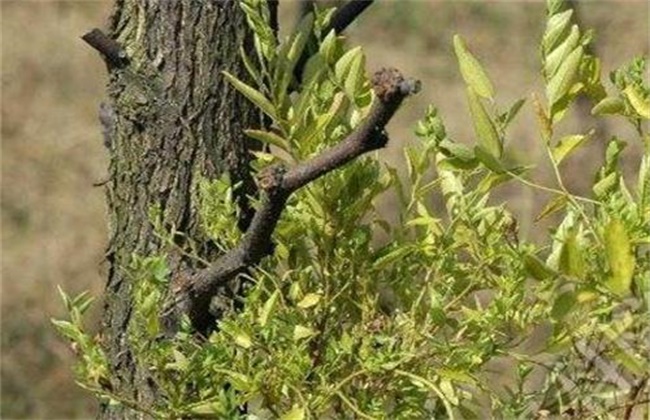
I. Harmful symptoms of jujube witches' broom disease
1. When the roots are affected, large numbers of adventitious buds sprout, often growing clusters of short witches' brooms, and multiple clusters of witches' brooms can appear on the same root. In the later stage, the cortex of the diseased roots rots, and in severe cases the whole plant dies.
2. When the branches and trunk are affected, both the main buds and secondary buds sprout to form growing branches, and the branches and leaves grow in clusters, the leaves turn yellow, the leaf margins curl upward, and the leaves are hard and brittle and dull, lacking luster. Buds on new branches can sprout repeatedly, forming clustered branches that are thin and weak, with short internodes and small, yellow leaves.
3. When the leaves are affected, the diseased leaves that grow after flowering are narrow and long, with dark veins, light green, and tend to scorch and wither; sometimes a very small dark-veined leaflet also grows on the midrib on the underside of the leaf, resembling the shape of a mouse ear.
4. When the floral organs are affected, atavism occurs, and the pedicels, sepals, petals, stamens and pistils degenerate into thin, weak vegetative organs such as branches and leaves.
II. Disease occurrence pattern
The pathogen of jujube witches' broom disease moves upward from below when the tree buds, and moves downward from above after the branches stop growing, often causing the whole plant to become diseased. The occurrence and epidemic of the disease are related to variety and management. Because there are certain differences in disease resistance among different varieties, some varieties have a high incidence rate. In addition, jujube orchards with dry, barren soil, poor fertilizer and water conditions, extensive management, and severe pests and diseases together with weakened tree vigor also tend to have jujube witches' broom disease epidemics.
III. Control measures
Diseased branches should be cleaned up in time, and diseased plants with no economic value should be eradicated. When planting, choose varieties with strong disease resistance as grafting rootstocks, and at the same time strengthen orchard management and apply more alkaline fertilizer and farmyard manure. In the early stage of the disease, you can use a hand drill to drill a hole in the root collar of the diseased tree, and in spring during the budbreak period of the jujube tree or in October, inject 500 ml of 0.1% tetracycline solution into each diseased tree by drip infusion. Alternatively, drill 1 hole on each side of the trunk base or the lower-middle part at a place without scars, reaching deep to the pith, with a vertical distance of 10-20 cm between the two holes, and inject oxytetracycline solution containing 10,000 units with a high-pressure syringe.
The above is an introduction to the control measures for jujube witches' broom disease. We hope it can help you. To learn more related knowledge, please stay tuned to us.