How long does it take for pine nuts to bear fruit after planting?
Pine nuts are the seeds of plants in the pine family (Pinaceae), with Korean pine (Pinus koraiensis) being the most common. Pine nuts are nutrient-rich nuts and also used in traditional Chinese medicine. At present, the main types in China are Brazilian pine nuts, Northeast pine nuts, and Southwest "Luoshui" pine nuts. If you plant a sapling that can produce pine nuts, how many years after planting will it bear pine nuts? This time frame actually also determines the cost of artificial cultivation. So let me introduce this for friends who want to know.
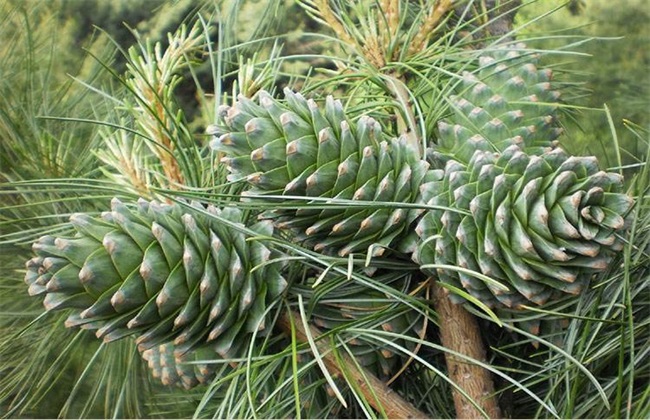
1. Fruiting time
Generally, if you plant a Korean pine naturally, the wait for it to bear fruit can be said to be extremely long, usually more than 25 years before it produces seeds, and even a grafted tree still needs about 12 years to produce seeds. Even other pine trees that produce pine nuts also take a very long time to produce seeds, so unless it is in its natural place of origin, where there is already a long history of growth, the time cost of artificial cultivation is too high.
2. Sapling planting
Although the time to produce pine nuts is very long, that does not prevent pine trees from being planted for other uses, for example, they can be used for ornamental landscaping in gardens. Plant landscaping is also possible. Choose the seedling-raising land. It needs fine, fertile soil that retains moisture and drains well. Disinfect and sprout the seeds before sowing. Disinfect the seedbed, and disinfect the tools, as they are prone to infection by pathogens. Sowing must be done with a certain spacing, and the seedlings that grow will be relatively large.
3. Planting management
Because pine trees take a very long time, management and maintenance require long-term patience. Generally, you need to regularly prune old leaves or dead leaves, and also clean up some old bark that will fall off. This allows nutrients to be concentrated for growth. Pine nut trees are often harmed by aphids, and aphids are feared because they mainly damage the roots of pine nut trees and also gnaw on the leaves. Damage to the root system is relatively serious for pine nut trees, so this is a key management point. Emulsifiable concentrate has a pungent odor and can block aphids. Smearing it on the trunk is effective for prevention and control.
4. Main producing areas
Northeast pine nuts are mainly the seeds of Korean pine, which is a valuable tree species, mainly growing in the very good environment of Changbai Mountain and the Lesser Khingan Mountains. Wild Korean pines grow there, and wild trees take even longer to produce seeds. The Korean region near Changbai Mountain also produces them, and some areas of Russia also produce them. The Greater Khingan Mountains also produce the pine nuts of dwarf Siberian pine (Pinus pumila), which taste a bit more fragrant than Korean pine nuts. Yunnan and other southwestern regions also produce "Luoshui" pine nuts.
At present, pine nuts are a very expensive and precious nut, and generally the time to bear fruit after planting is relatively long, taking quite a while. Wild pine trees take even longer to produce seeds, so pine nuts are all the more precious. But for people in the producing areas, they may also be quite common.