How to prevent and control winter jujube fruit shrink disease? Understand the key techniques in one article
Winter jujube is a fruit that everyone likes very much, generally coming onto the market in October each year, and winter jujube fruit shrink disease is a common disease during winter jujube cultivation, which can seriously affect fruit yield and quality. So how should winter jujube fruit shrink disease be prevented and controlled? Take a look with the editor.
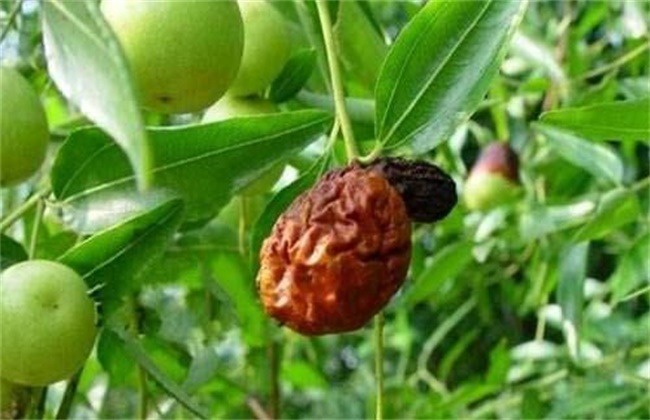
1. Disease symptoms
This disease mainly harms the fruit of winter jujube, often causing rotten fruit and premature dropping. When the disease occurs, pale yellow halo lesions first appear on the shoulder or body of the affected fruit, then gradually expand to form sunken, irregular pale yellow lesions, and scattered round brown spots also appear on the peel. At this point, if the fruit is cut open, the flesh will be found to be earthy yellow, loose and soft, with the diseased tissue showing spongy necrosis; the diseased fruit shrinks, and the flesh tastes bitter, completely losing its edible value and causing relatively large economic losses.
2. Disease occurrence pattern
Winter jujube fruit shrink disease, also known as black rot, brown rot and wilt disease, is a bacterial disease. The pathogen overwinters safely in diseased fruit, and the following year enters through fruit wounds carried by wind and rain or directly penetrates the peel. August to September is the peak period for the disease. After infection, the diseased fruit gradually dries, shrinks and becomes sunken, and the peel wrinkles and falls off. The severity and urgency of the disease are closely related to factors such as temperature, humidity and insect pests. Especially during continuous rainy weather or alternating intermittent sunny and rainy high-temperature, high-humidity weather, this disease is very likely to break out, causing large numbers of nearly mature winter jujubes to drop and resulting in serious losses. In addition, mechanical damage caused by friction and the feeding damage of leafhoppers, scale insects and mites also make it easy for the pathogen to invade and cause disease.
3. Prevention and control methods
First, after fruit harvest each year, the orchard must be thoroughly cleaned, completely eliminating diseased and rotten fruits from pests and diseases in the orchard, and these should be centrally burned or deeply buried to eliminate overwintering pathogens and reduce the disease incidence the following year. After fruit harvest in autumn, apply more organic fertilizer and phosphorus-potassium fertilizer to strengthen tree vigor and improve the plant's disease resistance. The fruit coloring stage is generally the peak period of disease occurrence, so 15-20 days before harvest is the key period for prevention and control. Spray the pesticide once every 10 days. In addition, attention should also be paid to controlling piercing-sucking pests such as leafhoppers, tortoise wax scales and peach fruit borers, so as to reduce wounds on jujube fruits and lower the pathogen infection rate.
The above is an introduction to prevention and control techniques for winter jujube fruit shrink disease. We hope it helps you. To learn more related knowledge, please keep following us.