When is the best time to plant hazelnut saplings?
Hazelnuts are also called mountain chestnuts and are known as one of the four major dried nuts, with a very wide distribution range. In China, they are mainly distributed in the northern regions of Northeast China, Inner Mongolia, Shanxi, and Shandong. There were already many wild hazelnut forests, and there has been a history of artificial cultivation and selection for many years. To understand hazelnut cultivation, you can start by learning about the planting time.
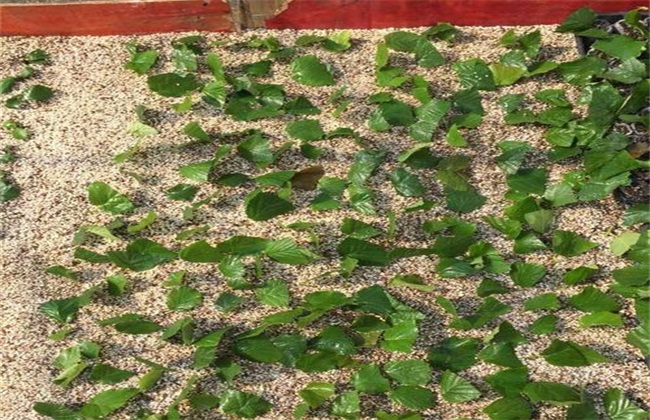
1. Planting time
For hazelnut planting, in the Liaoning region of Northeast China, planting is done in April, and the entire month of April can be used for planting, but in the Jilin region, planting can be done from April to May, making the time frame somewhat more flexible. Generally, the planting time is not limited too strictly, and a few days earlier or later is acceptable. In the Hebei region, planting can begin in late March, and in the Yellow River and Yangtze River basins, planting can begin from February to March, as temperatures rise more quickly, and it should not be later than March. Planting is generally done in spring, and autumn planting is also possible, but growth is not as good as in spring, and there is more management needed in winter, so it is generally not suitable.
2. Seedling propagation methods
The method most commonly used in production is cutting propagation, generally softwood cuttings, as hardwood is difficult to root. During cuttings, air humidity is very important and generally must be maintained above 95%, which roughly means the retained leaves will not wilt. Air humidity mainly does not rely on watering, but requires more spraying, with misting spray. A protected environment is needed for cuttings. Keep warm and moist.
3. Planting methods
After the branches take root, they gradually grow into seedlings, and the saplings gradually grow. Generally, they need to be cultivated for a longer period, roughly until the saplings grow to 1 m in length, at which point they can be transplanted. When transplanted at this time, the trunk is relatively firm, easy to plant and manage, and after growing vertically and stably, it is suitable for future shaping and cultivation. The planting density may need to be sparser, leaving space for the saplings to grow later. The row spacing is about 4 m, and the plant spacing is about 3 m. Different varieties have different tree sizes and can be adjusted.
4. Management and maintenance
After hazelnuts are planted, the main management includes watering, fertilizing, and pruning. Build a watering tree basin around the base of the tree, roughly a circular tree basin with a diameter of 1 m. This is because hazelnut irrigation requires thorough watering at one time. In the first year of planting, the main approach is to let it grow freely. In the second year, when the branches and leaves are full, prune to establish the trunk. The common form is the clumping type, directly keeping three basal branches and gradually growing side branches later. For the single-trunk type, keep the main trunk and then keep side branches level by level. Apply topdressing twice, once in May and once in July, using farmyard manure together with compound fertilizer, and water after application.
The hazelnut planting time is roughly between February and May depending on different regions and times. Adjust according to the regional climate and environment. When planting hazelnuts, you should also pay attention to the planting methods and some specific management details. These all belong to the content of cultivation.