When Is the Best Time to Graft Fruit Trees? A Detailed Guide to Methods
Most fruit trees can be grafted onto trees of the same type. Grafting is done to combine the advantages of two fruit trees and obtain better genetic traits, so that the fruit is of higher quality and the fruit quality is improved. It also increases resistance, adaptability, or disease resistance. What time is generally best for grafting fruit trees, and what methods are used, for better results? This is what we will mainly introduce.
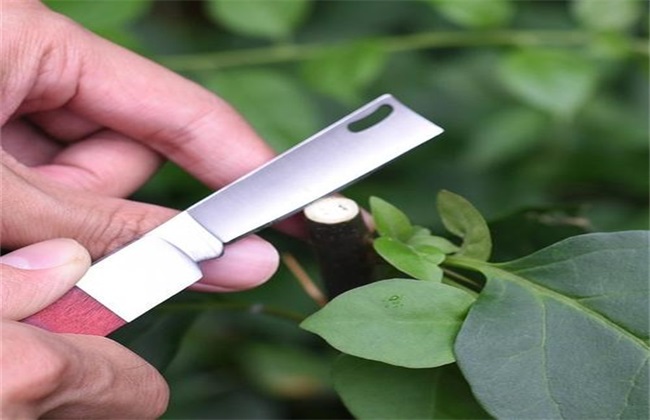
I. Grafting Time
Fruit trees must be grafted when the sap flow is slow, so it can be done in early spring or in autumn. In fact, summer also works, but the high temperatures and frequent rain make the survival rate too low, which is not good for summer growth. Most pome fruit trees are grafted in spring, while pomegranate can be grafted in summer or autumn. Stone fruit trees are more difficult to graft, so they must be grafted in spring. Succulent-type fruit trees, such as grapes and figs, must be grafted in early spring, before the sap begins to flow.
II. Grafting Methods
1. Insertion grafting
For insertion grafting of fruit trees, cut the scion into 10 cm lengths. If there is no time to graft right after cutting, or the grafting time has not yet arrived, it may need to be stored in damp sand. When grafting, disinfect the scion. At the grafting site, above the bud, make a downward cut, then remove the bud from the scion with a single cut from above. Insert it directly into the branch of the rootstock. Bind it with a plastic strip.
2. Cleft grafting
Cut the rootstock seedling back to about 30 cm above the ground, then take the scion, a branch with plump buds, and make a slanted cut at the lower end to form a cut surface. Then cut the rootstock open near the cortex, insert the scion, align the cambium layers, and bind it firmly. After it survives, the buds on the scion will still be plump.
3. Insertion method
Also called cross budding, make one horizontal cut and one vertical cut on the trunk, then cut off the scion with a single cut, slowly place it into the bark, and finally leave only the bud exposed while binding all other areas tightly and airtight. Afterward, promptly remove the original buds on the branch and check whether it has survived. Once it survives, the buds will grow very well; if it does not survive, the buds will wither.
4. Precautions
Some special fruit trees have special grafting requirements and times, so this cannot all be followed for every case. In addition, different fruit trees can choose the most suitable grafting method. Different seasons require different grafting methods. After grafting, shade and moisture management and care are needed to increase the survival rate.
For fruit tree grafting, common fruit trees can generally be grafted, and the best grafting time is spring. There are quite a few grafting methods, and sometimes as long as it survives, the method does not matter. But after gaining experience, you will know which grafting method is best.