What are the main factors affecting grape coloration?
Grapes can be said to be a national fruit, cultivated in all parts of our country. Grapes have high nutritional value and are relatively simple to grow. During their growth, grapes go through multiple growth stages. Among them, the veraison stage is a very important period, but during veraison, many factors often affect grape coloration. So what exactly are these factors? Let's take a look below!
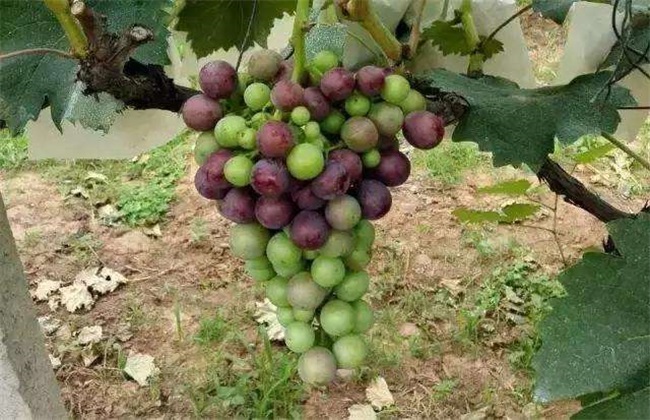
1. Temperature
Temperature is a key factor in the formation of grape anthocyanins, and grapes need a low-temperature environment when forming anthocyanins. High temperatures, on the contrary, inhibit the formation of anthocyanins. This also causes grapes in many high-temperature growing regions to look unripe, with color that simply does not meet the standard for sale, yet they taste very sweet. Therefore, professional survey data also shows that when the temperature of the main vine of grapes reaches 20 degrees, its anthocyanin content is far higher than the content under a 30-degree environment. And as the temperature drops, the anthocyanin content also rises noticeably.
2. Light
Different grape varieties have different light requirements. Therefore, differences in light also have a great impact on grape coloration. Among them, varieties such as Red Gaofeng and Red Globe generally increase their coloring ability as light intensity increases. In plain terms, the stronger the light for these varieties, the better the coloration. For varieties such as Black King and Summer Black, which do not have strict requirements for light intensity, the relationship between fruit coloration and light is not very significant, and sometimes there is even no effect at all.
3. Improper water and fertilizer management
Grape growth has a relatively large demand for potassium, and potassium is also a main factor ensuring grape coloration. However, many fruit growers over-apply or bias toward nitrogen fertilizer during cultivation, especially when the fruit is coloring. In fact, excessive application of nitrogen fertilizer not only fails to promote fruit coloration but also inhibits grape coloration. Too much nitrogen fertilizer not only inhibits the accumulation of anthocyanins but also affects the nutrient absorption for shoot growth. Then, if too much water is applied when the fruit is coloring, it is likely to cause excessive growth of new shoots, resulting in the phenomenon of delayed ripening with continued green growth.
4. Grape trellis
Grapes are a vining crop. During cultivation, in order to allow grapes to grow better and increase yield, trellising work is essential. At present, the trellis forms for grapes are generally mainly V-shaped or T-shaped. In fact, the trellis form is also a main factor affecting grape coloration. Professional data surveys have shown that the anthocyanin content of grape fruit on T-shaped trellises is far higher than that on double-cross V-shaped trellises. Fruit yield and quality are also greatly improved.
The above is a brief introduction to the factors affecting grape coloration. In addition to the above reasons, there are also various factors such as the tree's own condition and pests and diseases. Everyone must pay close attention. That is all for today's introduction. This article is for reference only, and we hope it can be helpful to everyone.