Why are young fruit trees prone to decline and death? How can it be prevented?
During fruit tree cultivation, young fruit trees often become weak and fail to thrive, which harms their normal growth and causes relatively serious economic losses for fruit growers. So what causes young fruit trees to be prone to decline and death? Let's find out together.
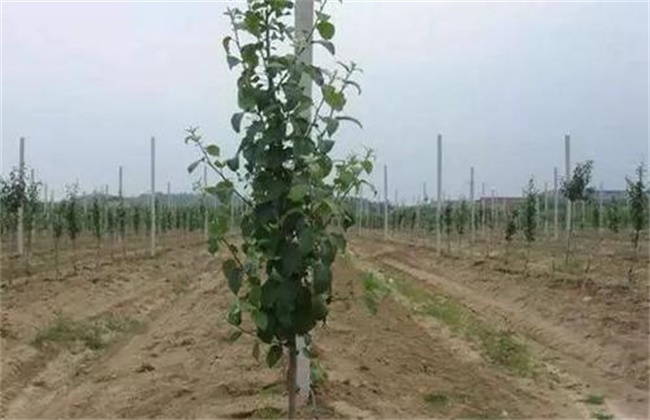
1. Branch shriveling (choutiao)
Branch shriveling in fruit trees occurs because overly frequent watering during the growing season and excessive nitrogen fertilizer application make young trees grow too vigorously and not fully hardened; combined with relatively high temperatures in winter and early spring and little rain or snow, the water demand of the branches and the supply from the root system become unbalanced, causing the branches to lose water and dry up.
Preventive measures: First, spring planting should be advocated; after autumn introduction, the plants should be heeled in first. After planting and trunk heading, put a long plastic film bag over each tree, which can prevent branch shriveling, prevent pests, and also promote bud break and growth. Alternatively, after planting, use glycerin or animal oil and strip it upward from the lower end of the seedling, which can prevent water loss. For those that have already developed branch shriveling after planting, in early April, cut off the shriveled part at the lower sprouting site, keep 2-3 buds on the upper part of what remains, and remove all the others.
2. Fertilizer damage
There are two types of fertilizer damage. First, applying too much chemical fertilizer and concentrating it too much can easily burn the root system; the symptoms are longitudinal drying of the trunk or death of the whole plant. Second, applying large amounts of undecomposed organic fertilizer burns the roots, causing the aboveground part to weaken or even die.
Preventive measures
For slight root burn caused by fertilization, first turn over the soil in the tree basin to mix the fertilizer and soil, then water 1-2 times to dilute the fertilizer concentration. For trunks with longitudinal drying, promptly apply medicine or paint, wrap with plastic sheeting, and promote the formation of healing tissue to prevent it from turning into dieback or rot disease.
3. Root water loss
Seedlings that are not watered promptly after planting, or whose roots have already lost water severely before planting, are very likely to die after planting.
Preventive measures: In this case, the only option is to replace the seedlings and replant. If the seedlings have only slight water loss, they can first be soaked in clean water for 10-20 hours, then dipped in rooting powder before planting. In addition, when lifting seedlings, dip them in mud slurry, then wrap them with plastic bags or wet cattail bags before loading and transporting, so as to prevent water loss during transport.
4. Freeze damage
Some fruit trees have poor cold resistance and are highly susceptible to freeze damage in winter, which causes the cambium of the branches to die, leading to longitudinal drying of the trunk or even death of the whole plant, such as persimmon, fig, pomegranate, and other fruit trees.
Preventive measures: For fruit tree varieties prone to freeze damage, preventive measures should be taken before overwintering. First, whitewashing: lime water can be applied to the trunk to provide relatively good freeze resistance. Second, wrapping: the trunk can be wrapped with newspaper or rice straw. Third, after wrapping, apply some animal fat or spray hydroxymethyl cellulose on the exposed trunk parts to prevent water loss. For parts that die from stress, they can be pruned off promptly.
The above is an introduction to the causes of and preventive measures against the easy decline and death of young fruit trees. We hope it helps you. To learn more related knowledge, please stay tuned to us.