How to prevent and treat pitaya canker disease?
Pitaya has many diseases, and quite a few are common ones. Today I am introducing canker disease because it is an extremely common disease. This disease breaks out heavily in summer, mainly harming the stems and fruits, and its damage is very comprehensive. Therefore, prevention and treatment must be taken seriously, the source must be tackled, the damage reduced as much as possible, and the symptoms improved. So today I will mainly talk about some characteristics of pitaya canker disease as well as its prevention and treatment.
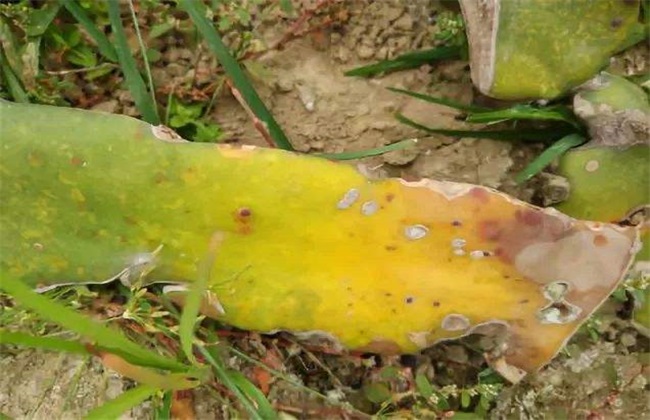
I. Disease symptoms
After infection begins, small green dot-like spots grow on the stems. The spots gradually turn yellow-brown, then the lesions gradually expand somewhat, some connect, begin to sink, are darker in the middle, blackened at the outer edge, and the spots are inconsistent. The lesions appear as yellow rust, and the lesions are nearly round, but some are irregular. Finally, the affected parts turn entirely yellow, rot, and dry up and wither when dry.
II. Causes of the disease
It is a fungal disease, occurring mainly under high temperature and high humidity conditions. It begins to occur after temperatures rise in late spring, and when it occurs it is often accompanied by soft rot and other diseases at the same time. The pathogen likes warm environments, and pitaya grows in the tropics, so the conditions for the disease are very good. Generally, after a typhoon passes through, the humidity is very high, and once the temperature rises the disease breaks out. After the pathogen infects, there is a one-week incubation period, and once the pathogen establishes itself it produces conidia on the lesions, which can cause repeated infection.
III. Prevention
In the early stage of stem growth, before fruiting, use a 300-fold solution of Liangguoan to spray for prevention, then use a 600-fold solution of Wofengsu for spraying to supplement nutrition, resist bacteria, and repair. When taking cuttings, use Qingkulike to dip the roots, to promote wound healing; without sterilization, contact with soil makes infection by the pathogen easy. After a heavy rainstorm, spray the agent once more for prevention. Usually pay attention to pest control, and do not cause wounds, as they are prone to infection.
IV. Treatment
After the disease occurs, use medication for treatment. First cut off the diseased branches, apply a disinfectant agent and a wound-healing agent, such as "Kuifuling"; then spray Liangguoan, garlic oil, and Wofengsu together for treatment. For severe cases, use Kuifuling plus Qingkulike together with agents for root irrigation treatment, as this is more direct and effective, and combine spraying to eliminate conidia. The cut diseased branches must be burned, the orchard must be thoroughly cleaned, and healthy plants must also be sprayed to prevent latent infection.
Pitaya canker disease is a fungal disease with widespread and common damage, and it is very serious, so prevention is key. For treatment, use medication both above ground and below ground together, which takes effect relatively quickly. For severely diseased plants, they can be pulled out and sterilized. As soon as the disease occurs, everything must be sprayed.