How to Manage Shoot Emergence in Citrus Trees: Key Methods Explained
Citrus is a fruit that promotes health in our daily lives, and many people grow citrus themselves, especially in the south. To achieve high yields and good quality when growing citrus, you must do a good job of managing shoot emergence. So, do you know how to manage shoot emergence in citrus? Let's find out together.
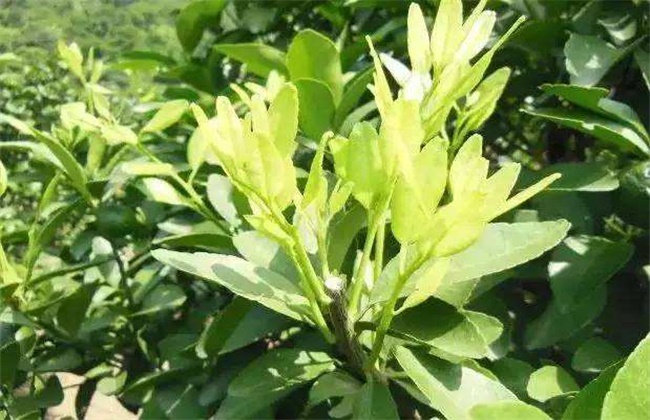
I. Timing of Shoot Emergence
The timing of shoot emergence in citrus should be determined based on variety, tree age, tree vigor, fruit load, irrigation conditions, and in combination with orchard and environmental conditions. Regardless of tree age, tree vigor, or fruit load, if you only want one flush of autumn shoots, growers can start inducing shoots in early August; if you want two flushes of autumn shoots, you can induce the first flush in early July and the second flush in August. If shoot emergence is carried out in September, the lower temperatures at this time will prevent the shoots from fully maturing, which will affect the quality of flowering and fruit set of the citrus the following year.
II. Situations Requiring Early Shoot Emergence
1. Dryland orchards should induce shoots early
Dryland orchards are often unfavorable for autumn shoot germination. If the fruit load is heavy or the tree vigor is weak, autumn shoots may fail to emerge, and in severe cases the tree may turn yellow, affecting the current year's yield and the following year's fruiting. Therefore, the timing of shoot emergence should be advanced. Drought causes low nutrient accumulation in the tree, leading to problems such as uneven and thin, weak autumn shoot growth.
2. Trees with heavy fruit load should induce shoots early
A heavy fruit load also easily leads to insufficient nutrients. Once nutrients are insufficient, new shoot growth will be extremely thin and weak, and fruit cracking is also likely to occur. Therefore, attention should be paid to shoot-promoting fertilizer during this period.
3. Early-maturing varieties should induce shoots early
Early-maturing varieties such as Shatang mandarin and Wenzhou mandarin should induce shoots earlier, and autumn shoots can be stimulated in mid-July.
4. Orchards with extensive management should induce shoots early
Orchards with extensive management consume a large amount of nutrients during the early fruiting and fruit expansion stages, resulting in insufficient fertilizer and water. If nutrients are not replenished in time, problems such as failure to sprout new buds and delayed autumn shoot emergence will occur. Therefore, shoots should be induced early.
5. The older the tree, the earlier shoots should be induced
Citrus trees aged 7-8 years should be fertilized early to promote autumn shoot growth, with shoots induced at the end of July. Trees aged 4-6 years are suitable for shoot emergence in mid-August, while trees that have recently set fruit are best induced in late August. This makes it convenient to coordinate with fertilization, save costs, and achieve fruit strengthening and shoot promotion, while also giving the tree sufficient time to absorb nutrients.
6. The further north the region, the earlier shoots should be induced
Temperatures in the north are generally lower than in the south, so in areas where planting regions extend northward, autumn shoots should be induced about 5 days earlier. August is good for autumn shoots; late autumn shoots that emerge after September cannot meet flowering conditions due to low temperatures and insufficient sunlight, which will seriously affect the following year's yield.
The above introduction on how to manage shoot emergence in citrus trees is hoped to be helpful to you. For more related knowledge, please stay tuned to us.