A Detailed Guide to Longan Planting Techniques and Management Methods
Longan is a tropical fruit of the south, and it belongs to the same plant family as lychee, but there are also many differences, meaning that planting and management also differ somewhat. Longan planting requires certain environmental conditions, and management is mainly about creating the most suitable environment for its growth. Among these, longan has strict temperature requirements and cannot tolerate freezing, so the cultivation areas are limited, and the focus of management must also revolve around temperature. Now let us look together at how to carry out the operations and management.
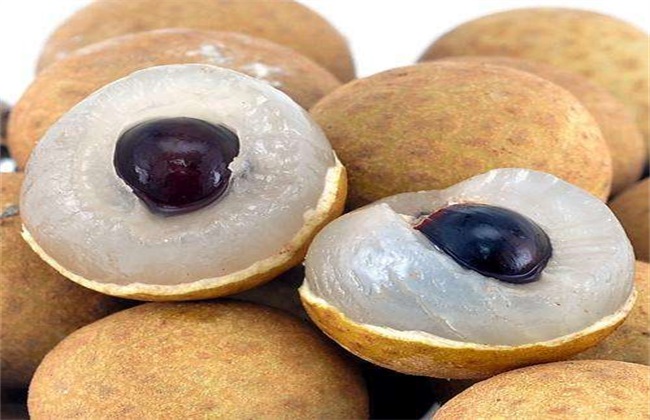
1. Building the Orchard
For the orchard, choose a small hill or gently sloping land, ideally a sunny slope, where growth is good. As long as it is not exposed to the wind, it is fine. The soil should be loose, deep soil, slightly acidic in pH. Generally, the soil requirements are not strict, and it can be planted in many types of soil, with the common ones being red soil and yellow soil. Planting on gently sloping land gives better drainage than on flat land. There should be no other planted varieties around the orchard to avoid cross-pollination.
2. Seed Treatment
Remove the fruit flesh from the seeds completely, wash them clean in clear water, and then soak them for 2 to 3 days. After the seeds absorb water and swell, they will gradually break through the seed coat. After that, change the water every day and soak for one week. Once all the seeds have split, the seeds can be placed in seedling soil to raise seedlings and wait for germination. They need to be sprayed with water daily to keep them moist.
3. Planting
When the seeds germinate and the seedlings grow to about 1 m, they can be transplanted. Be careful not to raise the seedlings too densely; leave room for growth. Dig holes for planting, and transplanting with a soil ball is best. The soil ball should be one quarter of the seedling height in diameter, and then the hole dug should be twice the size of the soil ball, half a meter deep. Apply fertilizer at the bottom and mix it with the subsoil, plant, cover with soil, firm it down, and finally water and then cover with topsoil.
4. Pruning
For young trees, cut back and set the trunk at about 60 cm above the ground to encourage new branches. Mainly keep 4 to 5 vigorous new branches as the main trunk, then remove some small and weak branches. After growing to about 2 m, pinch off the growing tip to control growth and continue keeping branches. Thereafter, pinch the growing tips of each level of retained branches, and they can be renewed at any time. However, the main trunk buds must be removed at any time, and excess upper buds should be removed. For mature trees, in spring, encourage new shoots, keep vigorous shoots, and remove excess leaf buds so that they do not grow too much. In summer, control the shoots and keep a small number of strong shoots. Early autumn shoots can be kept, and late autumn shoots should be removed. In winter, clean the orchard and prune dead branches and diseased leaves.
5. Fertilizer and Water
For young trees, mainly apply nitrogen fertilizer to grow the plant, together with phosphorus and potassium fertilizer, to promote the root system and strengthen the trunk. For mature fruiting trees, the main spring base fertilizer is farmyard manure at more than 1000 jin per mu, with little chemical fertilizer applied. Fertilize at the flowering stage, and topdress multiple times during the fruiting stage, with appropriate amounts of topdressing so as not to cause fertilizer damage. Young trees grow vigorously and their roots absorb well, so watering can be done according to soil moisture. For mature trees, watering should follow the stages: once a month in the early stage, less watering during the flowering stage, and shelter from rain; during the fruiting stage, water once every one to two weeks.
When planting and managing longan, attention should be paid to fertilizer and water management, the cultivation of young trees, and the management of mature trees. Raising seedlings for planting is the prerequisite, and planting and care are the key.