Detailed Explanation of Mulberry Planting Techniques and Management Key Points
Mulberry is the fruit of the mulberry tree, a fruit with very high nutritional value, and it currently sells for a higher price on the market than other fruits. Its market economic benefits are very good, and it is also very popular among the public. Nowadays some people grow mulberries to make money, so the main planting methods still need to be clearly understood. How can you achieve high-yield planting and obtain a high yield after planting? Let us learn about the specific methods together.
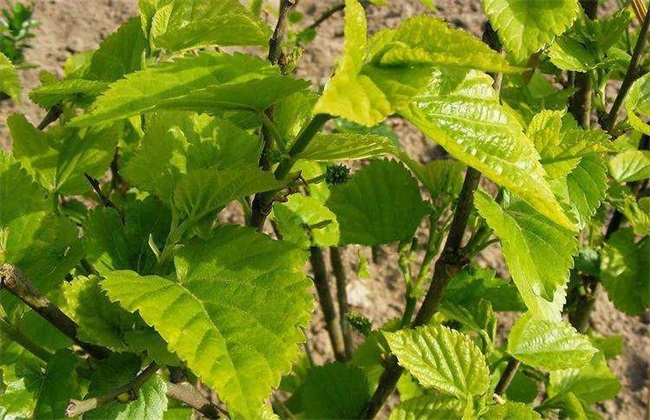
1. Orchard establishment
It is best to choose a low hillside for planting, ideally with a water source nearby and relatively convenient roads, so that transporting fertilizer and pesticides is convenient, and the transport of seedlings and the harvesting and transport of fruit are also convenient. It is best to have a south-facing hillside that can receive good sunlight. It is best to use hilly mountainous land, not mountains that are too high, as transport is inconvenient. The soil is required to be sandy loam, with good aeration and fertilizer retention.
2. Seed selection
For seed selection, look for varieties suitable for mountain planting, with a relatively strong root system, able to resist drought, and able to grow in most soils. The tree vigor is required to be strong, with good disease resistance and few occurrences of disease. If it is to be eaten fresh, Hongguo No. 2 is best; otherwise, Hongguo No. 1 can be chosen.
2. Land preparation
First clear the weeds around the orchard, then a protective net can be set up, and then plow deeply; after plowing, carry out fine tillage, with a plowing depth of about 40 cm. Some farmyard manure can be used in the soil as base fertilizer, but it should not be applied too much; bury it underground, and base fertilizer still needs to be applied at planting time. Level the soil; if the soil is too dry, it can be irrigated once as a whole.
4. Planting density
The planting density on mountain land is somewhat denser than on flat land; mountain land is somewhat easier to manage, and the ventilation and light transmission conditions are also much better, so dense planting is used. About 300 seedlings 1 m tall are planted per mu. Dig holes for planting; after digging out the subsoil, fertilizer can be applied, with 10 jin of farmyard manure per plant; after backfilling the soil and mixing it, cover with soil again, spread the seedling roots out, cover with soil up to ground level, water to settle, and then cover with soil again up to the root crown.
5. Fertilization and watering
Mainly apply more farmyard manure and less chemical fertilizer; chemical fertilizer easily causes soil compaction, and when the soil solution concentration is too high, and fertilization is excessive, the roots easily lose water, causing fertilizer damage, and afterward they cannot absorb water or nutrients. Apply nitrogen, phosphorus, and potassium in combination when fertilizing, and do not apply fertilizer in a one-sided way. Fertilization should be accompanied by watering for better absorption, and the number of waterings should increase during the fruiting period.
6. Pruning
After new trees sprout and send out shoots, the trunk should be headed back at about 1 m 2 from the ground; after heading the trunk, thin out branches and retain branches, and the retained branches should be cut back to stimulate more new branches. Select and retain branches layer by layer, so as to ensure the branches are vigorous and form a tree shape as quickly as possible. Unsuitable buds should be wiped off and not allowed to sprout.
The above content helps everyone understand mulberry planting techniques, methods, and processes. After reading, please continue to support us.