How many days does a watermelon generally take to ripen? An introduction to the ripening period
How long it takes for a watermelon to complete its entire growth and ripening period after planting varies somewhat depending on the variety and the region where it is grown. Warmer regions take less time, colder regions take longer; the Yangtze River basin takes less time, while the north takes longer, but some early-maturing varieties take less time than late-maturing varieties, and greenhouse growing takes less time than open-field growing. How long exactly is needed, let's introduce it in detail right away.
1. Ripening time
If watermelons are generally planted in the open field in March, they will ripen in about June. Early-maturing varieties need about 90 days, such as 'Zaochun Yu'; mid-maturing varieties need about 100 days, such as 'Xinong R'; late-maturing varieties need 120 days, such as 'Hongyou No. 2', and they all ripen around June to July. For greenhouse planting, choosing early-maturing varieties and planting around February means they can reach the market at the end of April or in May.
2. Growth stages
The entire growth period mainly has four stages. The germination stage is the period when the cotyledons unfold; it mainly relies on seed nutrients and cotyledon photosynthesis to provide nutrition, and mainly grows the root system. It needs a temperature above 25°C. The seedling stage runs from the emergence of the true leaves to the growth of six true leaves, and mainly involves leaf and stem growth. It needs a temperature above 20°C. The vine-running stage mainly involves rapid plant growth and the opening of female flowers. It mainly shifts to reproductive growth and needs a temperature above 20°C. The fruiting stage runs from flowering to ripening and mainly involves flowering and fruiting and nutrient supply; it needs a temperature between 20°C and 26°C.
3. Ripening standards
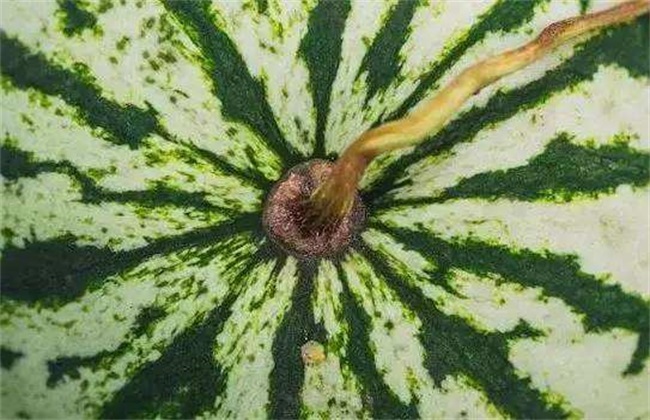
When the blossom end is sunken and the stem is green, it means the fruit is ripe. For striped watermelons, if the pattern is clear, it is ripe; for black watermelons, if the color is glossy and black, it is ripe. If the rind is smooth, it is fairly ripe; if a fruit of the same size becomes lighter in weight, it is ripe. The common method of tapping the melon: generally a thudding sound means it is ripe. If the sound is very deep and low, it is overripe. If it is a melon you grew yourself, you can also put it in water to test it; if some of it floats to the surface, it is just ripe.
4. Ripening period
The south ripens earlier, at about June, and the north ripens in July. With protected cultivation, it can be grown in all four seasons, and the ripening time must be determined according to the planting time. Early-spring planting ripens in May, and with autumn planting, it can also ripen in winter. Depending on the variety, open-field planting can ripen anywhere from June to September. Sometimes it also depends on climate and altitude; at higher altitudes the ripening period is later, while dry, warm conditions make it earlier.
How many days after planting watermelons ripen mainly depends on the variety, planting site, planting climate, altitude, environment, temperature and other influencing factors, and above all on the watermelon's own ripening period. But generally it is three to four months. I hope the above information will be helpful to everyone.