Key Technical Points and Management Methods for Growing Crystal Pears
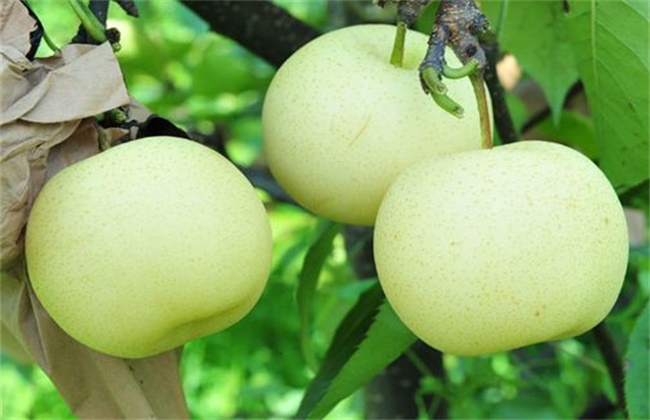
The Crystal Pear is a new yellow pear variety bred in South Korea. This variety has strong cold resistance, drought resistance, disease resistance, and tolerance of poor soil, as well as strong adaptability. In recent years it has been developed in various parts of China, and it is an ideal large-fruited, high-quality, storage-tolerant yellow pear variety for consumers. So how should Crystal Pears be grown? Let's learn about it together.
1. Orchard establishment
Although the Crystal Pear is drought-resistant, cold-resistant, tolerant of poor soil, and highly adaptable, the planting site should still be carefully chosen. The best cultivation site is sandy loam or loam with deep soil, fertile soil, and rich organic matter. It is best to have some drainage and irrigation capacity, and the terrain should be flat. Avoid cultivating on ridges and in wind gaps.
2. Reasonable close planting
The Crystal Pear produces a large amount of pollen. When pollination is insufficient, its fruit set rate is low, the fruit is small, and the quality is poor. Therefore, when cultivating it, a sufficient number of pollinator varieties should be reasonably provided to increase the fruit set rate and fruit quality. Pollinator plants should account for more than 20% of the total number of plants cultivated. The Crystal Pear enters the fruiting stage early, its trunk is upright, and its sprouting ability is relatively weak, so it is suitable for close planting to promote an increase in early yield. A spacing of 2 m × 4 m or 2 m × 3 m between plants and rows can be used to increase the accumulation of photosynthetic products and promote early production.
3. Strengthen management
When the Crystal Pear carries a heavy fruit load, the tree vigor will weaken, so during production it is necessary to prevent the decline of tree vigor. The yield per mu should be controlled at about 3000 kg, and excess flowers and fruits should be thinned in time. At the same time, nutrients should be supplemented in time. After harvesting the fruit, 3000 kg of organic fertilizer per mu should be applied as base fertilizer. During the flowering and fruiting period, quick-acting chemical fertilizers should be applied to supplement nutrients. The amount of fertilizer applied should be determined according to the yield level and soil fertility. During production, renewal pruning should be strengthened, and the age of fruiting branches should be kept within 2-3 years. Aging fruiting branches older than 3 years should be renewed in time. Each year, renewed branches should account for about 1/3 of the total branch volume, maintaining a dynamic balance among fruiting branches, flower-forming branches, and auxiliary nurturing branches to prevent the decline of tree vigor.
4. Pest and disease control
The Crystal Pear has relatively strong disease resistance, especially strong resistance to the black spot, anthracnose, and ring rot diseases common to other pear trees, but it is highly prone to fruit russeting. Pests mainly include aphids, scarab beetles, scale insects, and fruit borers, and control should be strengthened in production. For pests and diseases, prevention should be the main approach. Before bud break, spray lime sulfur mixture to kill overwintering sources of pests and diseases, reduce the base number of pests and diseases, and lay the foundation for control. After fruiting, bag the fruit in time to protect the fruit surface and avoid fruit russeting and damage by fruit borers.
The above is an introduction to Crystal Pear growing techniques. We hope it can help you. If you want to learn more related knowledge, please follow us.