Detailed Explanation of Irrigation Techniques for Mountain Apple Orchards
Apples can be planted on flat land, but they can also be planted on mountain land, and the most important problem to solve in mountain areas is irrigation and watering. If there is no water source on the mountain, then irrigation is very difficult; if there is a water source on the mountain, irrigation is somewhat easier. But what are the particular considerations for watering when planting on mountain land, how should irrigation be done, and what should be noted? So this is a problem we must consider, and now let us take a look together at how to do it.
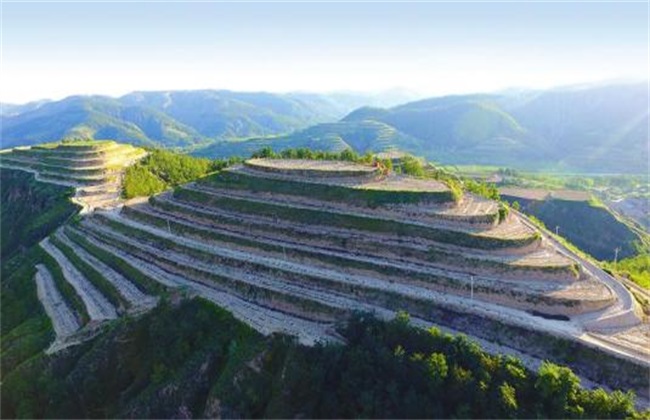
1. Reverse-slope water retention
Fruit trees planted on sunny slopes are prone to drought, mountain areas have little water, and the root system is not very strong, so it is best to terraced the hillside like building terraced fields. Then a few pits should be dug in each layer of orchard land to store water, going down layer by layer like fish scales, called fish-scale pits. In this way, irrigation can be carried out at any time.
2. Straw mulching around the roots
Spread some straw, stalks, and the like under each fruit tree, just one layer, not too thick, as low temperatures can easily rise. Mulching grass around the tree roots is to maintain soil moisture, and it can also increase temperature, prevent frost damage, and improve soil fertility. However, after mulching grass for a long time, pests are likely to appear, so it needs to be replaced or sprayed with pesticides.
3. Fertilizer-water root irrigation
Irrigate each fruit tree, directly irrigating the roots, combined with fertilization; fertilizer can be dissolved in water 3 and irrigated together at the roots. Each time, about 20 kg per tree is irrigated, about once every one to two months; do not irrigate too many times, because too many times can easily damage the roots and cause water accumulation. Being too wet can easily lead to disease.
4. Irrigation methods
Pipes can be laid in the orchard, and then drip irrigation technology can be used. When needed, one end is connected to a water source, and irrigation can be carried out. Or the pipes can be replaced with sprinkler irrigation facilities, so that the tree body can also feel the moisture, and it can cool down during high summer temperatures. This irrigation method also saves water resources, and at the same time the irrigation is easily absorbed, with very good results.
5. Digging pits to store water
Dig a large water storage pond near the mountain planting area, and after digging the pond, lay thick plastic sheeting inside it, then wait for rainy days to fill the pond with water. Then wooden poles should be put over the water pond, and plastic sheeting covered on top to prevent water evaporation, so it can be used directly when watering is needed. However, attention should be paid to disinfecting the pond; water stored continuously is prone to germs.
Planting apples on mountain land is actually much better than planting on flat land. Apart from the water source problem, mountain land can receive more sunlight, and sometimes there is not that much land for planting apples, so mountain land can also be put to use. The problem of water use on mountain land can be solved through the above methods.