Detailed Explanation of Field Management Techniques for Hovenia dulcis (Japanese Raisin Tree)
Hovenia dulcis, also known as the "longevity fruit," has a sweet, pulpy fruit with a slightly astringent taste. It can be eaten raw, used for brewing wine, or boiled into sugar. It has high edible value and also considerable medicinal value. So do you know about the field management of Hovenia dulcis? Let's learn about it together with the editor.
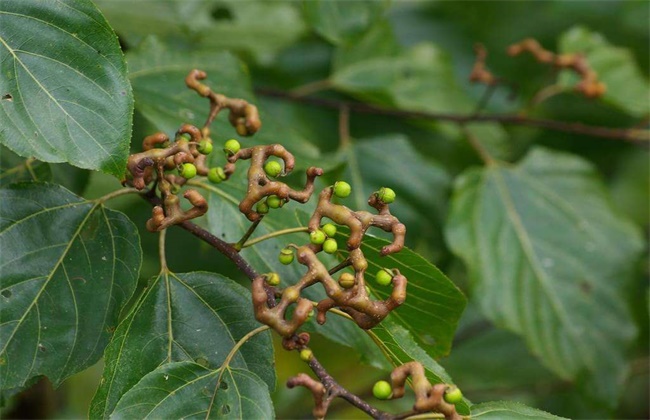
1. Fertilization
Hovenia dulcis is fond of fertilizer. On the basis of applying sufficient base fertilizer, it needs topdressing twice a year. The first time is in early to mid-May, and the second time is in mid to late July. Generally, 5 kg of decomposed farmyard manure and 100 g of superphosphate are applied per plant. After mixing them evenly, apply in furrows opened between the rows. After fruit harvest, one fertilization should be applied, generally before the soil freezes, mainly with decomposed farmyard manure, covering the root system 1-2 cm deep, or covering with a layer of dead branches and fallen leaves with a layer of soil pressed on top. This not only helps with heat preservation and moisture retention, but also protects the buds from frost damage, which is beneficial for seedling emergence and the yield of the following year.
2. Intertillage and Weed Control
Intertillage and weed control should be carried out 3-4 times a year to promote the growth and development of the plant root system. During intertillage, attention should be paid to the depth to avoid damaging the roots. Generally, it should be shallow at the edges and slightly deeper in the middle. Near the root system, shallow hoeing should be done, with the principle of not damaging the roots. Weeding should be done frequently. For small-scale cultivation, manual weeding is recommended. For large-scale cultivation, herbicides are recommended, but when using them, attention should be paid to the chemical concentration and spraying method to avoid affecting the plants.
3. Drought Prevention and Drainage
Hovenia dulcis is a fibrous-root crop, and its roots are mostly distributed in the top 15 cm of soil, so it is afraid of both drought and waterlogging. In Northeast China, drought often occurs in May and June. When drought occurs, it should be watered in time to keep the soil moist and promote plant growth. In July and August, it is the rainy season, so drainage ditches should be dug in advance to promptly remove accumulated water from the orchard, reduce humidity, reduce root rot, and prevent pests and diseases.
4. Orchard Cleaning
If the cultivation site has no natural forest shade, remove the covering after seedling emergence, and then build a shade frame covered with wormwood, sorghum stalk curtains, or nylon netting. In September, remove the shading materials. Wait until the aboveground parts become bitter, then promptly clean the orchard, pick out dead leaves and other debris, take them outside the orchard and burn them, and at the same time spray chemicals to control pests and diseases.
The above is an introduction to the field management techniques for Hovenia dulcis. We hope it can help you. If you want to learn more related knowledge, please stay tuned to us.