What are the suitable environmental conditions for growing pomegranates?
Pomegranates have an extremely high vitamin content. The history of pomegranate cultivation in China began with its introduction during the Han Dynasty. Through long periods of artificial cultivation and natural selection, many excellent cultivars and many specialty varieties have emerged. The pomegranate is a fruit that blooms in summer, from which it can be seen that pomegranates prefer a warm growing environment and can develop even under high summer temperatures. So what exactly are the specific growing environment conditions? Let's take a look together.
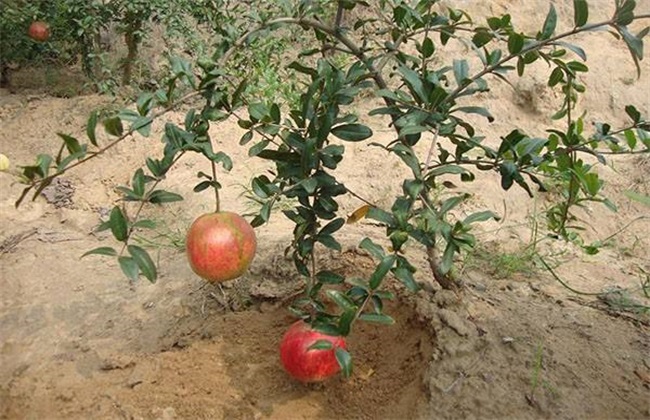
1. Temperature
Pomegranates prefer warm environments and are afraid of cold, but they can also safely get through winter in subtropical regions. Unless the winter is too cold, they are prone to frost damage. The tree body can sprout at around 11 degrees; during the flowering period, a temperature between 24 and 26 degrees is needed for good pollination and fertilization; 18 to 26 degrees is suitable for fruit growth and development. When the daytime temperature is around 20 degrees and drops somewhat at night, the fruit will be sweeter. When the temperature is below 10 degrees, growth stops.
2. Soil
It has loose requirements for soil. Flat land, mountainous land, and hills can all be used for planting, and even sandy beaches can be used, but mountainous and hilly areas are most suitable. Loose soil is required, and gravelly land is also acceptable; as long as it is breathable, it can adapt even if it is not so good at retaining water and fertilizer. Sandy loam is best. Soil pH between 4.5 and 8.2 can all affect it, with a relatively wide acid-base range. It is best to plant in yellow soil.
3. Water
Because the root system is well developed, when planting you can wait until the soil looks relatively dry before watering. Do not water too frequently, as this will instead cause waterlogging that damages the roots or causes the soil to become compacted. Water about once every half a month to a month. During the fruiting period, increase watering, generally watering once every week or so. Do not use flood irrigation; seepage irrigation is enough. Drainage ditches should be kept clear to ensure drainage is unobstructed during the rainy season.
4. Nutrition
It likes fertilizer. At the first planting, apply 2000 jin of base fertilizer per mu, and afterward apply 1500 jin of farmyard manure per mu as base fertilizer. In April, apply a liquid fertilizer once as a top dressing, combined with watering, to promote flowering. Do not fertilize during the flowering period. Flowering pomegranates need top dressing after fruiting, while fruit pomegranates do not need top dressing, as top dressing easily causes fertilizer damage. Sometimes it is necessary to prune some weak branches and the like to concentrate nutrients.
5. Light
Growth requires sufficient sunlight. It is not very shade-tolerant and relatively light-loving, so the planting density should not be too dense. Good ventilation and light transmission must be ensured. With sufficient sunlight, the leaves' photosynthesis is relatively strong and can produce more organic nutrients to satisfy the tree's growth. Flower bud differentiation during flowering also requires a certain amount of light.
Pomegranates like light and warmth and are suitable for planting in warm, humid areas. Growth requires sufficient nutrients to maintain a robust tree vigor. For planting soil, alkaline, loose sandy loam is best.