What precautions should be taken when applying pesticides to grapes?
Summer heat is the season when pests and diseases run rampant. Grapes are approaching harvest at this time, and if pest and disease control work is not done well, it can easily lead to reduced yields and seriously affect profits. However, when carrying out chemical control, the use of pesticides must be scientific and reasonable to avoid backfiring. So what should be noted when applying pesticides to grapes? Let's find out together.
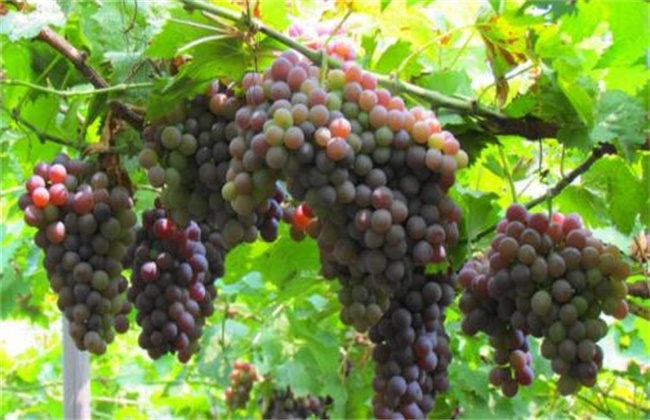
1. Apply pesticides according to the symptoms
For diseases at different stages throughout the entire growth period of grapes, the corresponding control agents should be used accurately. For example, for the prevention of black spot disease, Bordeaux mixture, chlorothalonil and others can be used, and after onset, medications such as Fusixing and Xiansheng can be used for treatment. For downy mildew, Mianshasheng, phosethyl-Al and others can be used for prevention, and after onset, spraying metalaxyl + mancozeb can be used for treatment; for anthracnose, thiophanate-methyl and carbendazim can be used for prevention, and after onset, medications such as thiram and tuijunte can be used for treatment; for gray mold, iprodione and procymidone can be used for prevention, and after onset, pesticides such as Shijiale and Lüheng No. 5 can be used for treatment.
2. Apply pesticides at the right time
For the prevention and control of pesticide damage in grapes, pesticide application should be timed according to the rainy characteristics of the growth period, and applying pesticides promptly before and after rainfall can achieve twice the result with half the effort. Before rain, it is advisable to spray systemic protective agents that are also resistant to being washed off by water, such as Shibaoling, thiophanate-methyl, carbendazim and others. After rain, it is advisable to use therapeutic agents, such as tuijunte, thiram and others. The more promptly pesticides are sprayed after heavy rain, the better the control effect.
3. Mix pesticides scientifically
There are many types of pests and diseases on grapes, and the corresponding types of pesticides and the number of applications are relatively high. To save time and effort, growers often mix pesticides together in a concentrated way. This not only saves time but can also effectively improve pesticide efficacy. However, if the scientific principles of mixing are not mastered, it may not only reduce pesticide efficacy, but even cause pesticide damage, leading to curled leaves and spots, reducing photosynthesis, resulting in insufficient synthesis of nutrients, which is detrimental to yield.
4. Rotate pesticides
Pesticides that easily develop resistance should not be used continuously. Most fungicides used to control grape diseases will develop resistance, especially in the rainy conditions of the south, where the pesticides used for disease control and the number of sprayings are more than double those in the north. Repeated use of the same pesticide will reduce its effectiveness, so in order to reduce resistance and enhance control effects, each pesticide should be alternated with other pesticides when used. It is recommended that the number of uses throughout the entire growth period not exceed 3 times.
The above is an introduction to the precautions for pesticide application on grapes. We hope it can help you. If you want to learn more related knowledge, please stay tuned to us.