Detailed Explanation of Wax Apple Cultivation Techniques and Management Key Points
The wax apple (Syzygium samarangense) originates from India and is also called Java apple. It is mainly grown in tropical regions, such as Hainan, Taiwan, China, and Guangdong in our country. There are mainly two types, green and red. The fruit contains various nutrients, and it is a tree-type fruit species. For tree-type fruit trees, the key part of cultivation techniques lies in some of the later management techniques, because after planting they grow for many years, so the management period is long. For the specific cultivation content, you can continue reading the following article.
I. Propagation Methods
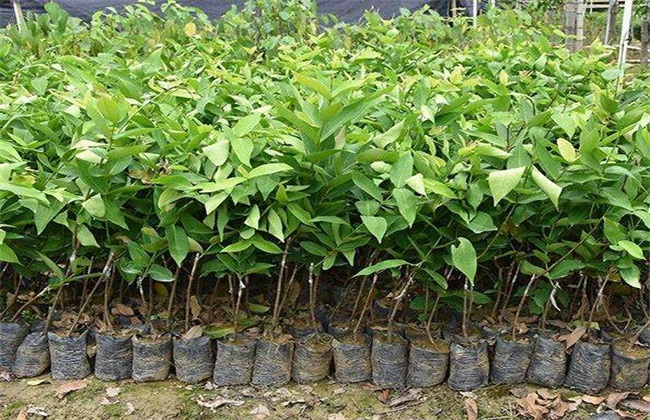
The common method is cuttings. Cuttings root easily and produce seedlings quickly. In autumn, take 1-year-old branches, about 10 cm long, and insert them in a sand seedbed, keeping them moist and shaded the whole time. After about 1 month they will take root. Sowing should be done in spring. After raising seedlings in a seedbed, select high-quality seedlings for planting. Dig holes about 1 m wide and 1 m deep, apply enough base fertilizer, and then plant. Per mu, plant about 400 trees on flat land and 450 trees on sloping land. For layering, do it in summer. Select thick branches, make a ring bark cut 2 cm at the base, wrap with wet soil, and after roots grow, cut them off and plant.
II. Flower Promotion
To bear fruit multiple times a year, flower promotion is needed. After summer harvest, soak with water for one and a half months. You can also injure the trunk by beating the phloem of the trunk with a stick until it becomes loose. You can pull the branches apart and keep them drooping, which can accumulate some nutrients to supply flowering and inhibit branch growth. In fact, you can also twist shoots, ring cut, and the like.
III. Pruning
Keep most of the spring shoots and thin out a small portion. Before budding, you can remove some buds at poor nodes. In summer, renew the branches of fruiting trees, keep some strong summer shoots, and remove the rest to avoid consuming nutrients. In addition, for adult trees about to bear fruit for the first time, cultivate fruiting branch groups. Young trees need trunk determination, then branch retention, to train the tree shape. Aging trees need renewal and rejuvenation. Generally, cut back some old branches to promote new branches. Renew the root system in turn: first cut off part of the root system, and cut off the other side the following year.
IV. Water and Fertilizer
Wax apple likes fertilizer. In the early stage, control nitrogen fertilizer and apply more phosphorus and potassium fertilizer. Do not apply nitrogen fertilizer during the flowering period. After fruiting, apply more phosphorus and potassium fertilizer. Do not water during the flowering period; at other times keep moist. For adult trees, apply 1500 jin of base fertilizer per mu. For young trees, apply 1000 jin of base fertilizer per mu. For aging trees, apply 600 jin of fertilizer per mu, used in two applications, one in autumn and one before spring. For topdressing during the fruiting period, spray nitrogen and phosphorus: 50 jin of nitrogen fertilizer and 30 jin of phosphorus fertilizer per tree.
V. Diseases and Pests
The main disease is anthracnose, which infects fruit and leaves. Use 56% thiabendazole wettable powder or 43% kasugamycin wettable powder for spray treatment. Various agents can be selected, mainly some fungicides. Generally spray after pruning diseased branches and fruit. The main pest is scarab beetles. Directly shake the tree and use their death-feigning behavior after falling to the ground to capture and kill them. Place a sugar-vinegar liquid mixed with pesticide to trap and kill them. Use 10% imidacloprid wettable powder at 1500 times dilution for spray control.
Wax apple cultivation techniques are mainly the methods of planting and seedling raising and some management for promoting flowers and fruiting. What needs attention is the regulation and supplementation of nutrients and water. What is noteworthy is the various diseases and pests in the orchard, especially during the high-temperature and rainy summer season.