What causes citrus puffing? Detailed explanation of prevention and control measures
Citrus puffing is a common physiological disorder, mainly referring to the phenomenon in which a gap forms between the peel and the flesh during the ripening process of citrus, causing the peel to bulge, and it mainly occurs in the late ripening stage. So how should clean puffing be prevented? Let's take a look together.
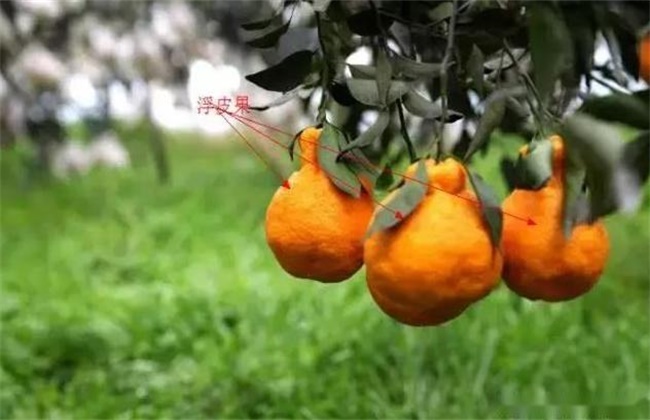
1. Excessive nitrogen fertilizer
Nitrogen fertilizer is a nutrient essential for the growth of many plants, and it can promote plant growth, but applying nitrogen fertilizer in excess or too late will not only affect fruit coloring, but will also promote a second expansion of the fruit and lead to the appearance of puffing.
Prevention and control methods: The application of nitrogen fertilizer should be controlled and organic fertilizer should be applied more. In orchards with poor irrigation conditions, weak tree vigor and a large fruit load, fertilizer should be applied earlier, and the fertilizer types should preferably be quick-acting organic liquid fertilizer or nitrogen-phosphorus-potassium chemical fertilizer, and nitrogen fertilizer such as urea must not be applied alone. During the color-turning stage, attention should be paid to the amount of nitrogen fertilizer applied.
2. High temperature and high humidity or water shortage and drought
In autumn, during the fruit coloring stage, there is a lot of rainfall, and under high temperature and high humidity conditions, puffing is very likely to occur. At the same time, when the fruit expansion stage arrives, if there is high temperature and drought and irrigation is lacking, puffing is also very likely to occur in the orchard.
Prevention and control methods: Water management should be done well. For densely planted orchards, a large amount of irrigation should be avoided during the fruit ripening stage, attention should be paid to clearing ditches and draining water, and the humidity in the orchard should be reduced as much as possible. At the same time, water must not be lacking, and timely watering should be done during drought, with drip irrigation being recommended.
3. Calcium and boron deficiency
If calcium or boron is insufficient during the fruit expansion stage, puffing will also occur. Calcium is an important element for fruit firmness. The more sufficient the calcium content, the better the fruit firmness. If the calcium content is insufficient, the connections between fruit cells become loose and the toughness is poor, making puffing extremely likely to occur, so calcium should be supplemented in a timely manner.
Prevention and control methods: When spraying to prevent and control pests and diseases, water-soluble fertilizer can be used in small amounts multiple times, foliar fertilizer with multiple elements can be added, and calcium and boron fertilizer should be sprayed as early as possible. Some studies have shown that although simply applying inorganic calcium compounds can reduce puffing, it also has the effect of lowering fruit quality.
4. Improper use of hormones
Improper use of hormones can also cause puffing. As planting technology has advanced, the use of gibberellin on citrus and the use of cytokinin to promote flower bud differentiation have become relatively common. When these hormones are used at normal concentrations, there is no problem at all, but if the concentration used is too high and the frequency is too great, it will cause large-scale puffing.
Prevention and control methods: When using hormones, close attention must be paid to the concentration, and the concentration and frequency of use must never be increased or decreased at will. Too high a hormone concentration can very easily cause a large amount of puffing, while too low a concentration cannot produce the corresponding effect and may even have the opposite effect.
The above is an introduction to the causes of citrus puffing and prevention and control measures. I hope it can help you. To learn more related knowledge, please keep following us.