Detailed Explanation of the Key Cultivation Techniques for Taiwan Green Jujube
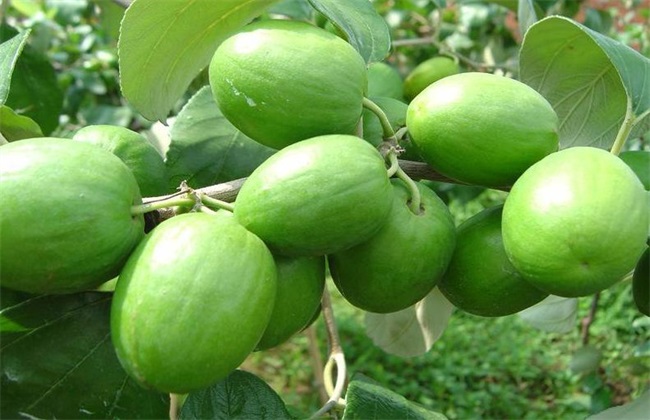
Taiwan green jujube, also called Indian jujube, is native to India; the varieties cultivated today have been improved over many generations, and every part of this jujube tree can be used. This fruit has fairly good development prospects. The specific cultivation techniques involve a number of steps, and there are also many issues to pay attention to along the way. Let us start introducing them to you now.
I. Site Selection and Orchard Establishment
Choose a broad, relatively high hillside for planting; the soil should be deep, fertile, loose sandy loam. Sometimes conditions are not that good when establishing an orchard in such a place; as long as it is not sandy land or low-lying land and there is a water source, an orchard can be established.
II. Planting
The planting spacing is generally more than 6 m between plants and about 5 m between rows. Because the tree grows fast and branches strongly, the spacing is relatively wide so as not to affect growth. Do not plant too densely, or growth will be hindered, management will be inconvenient, and growth will be poor. Base fertilizer should be applied at planting: 30 jin of farmyard manure per plant, 1 jin of compound fertilizer, 1 jin of calcium fertilizer, 0.4 jin of magnesium fertilizer, and 0.0251 kg of boron fertilizer. After planting, cover with grass to prevent sun exposure and evaporation of water.
III. Fertilization and Water Control
Because it grows fast and consumes a lot, it needs more fertilizer; the main point is to apply more base fertilizer and more phosphorus and potassium fertilizer before flowering. Poultry manure can be used as base fertilizer, but it is best to use mild compost. Apply about 1200 jin per mu, plus 100 jin of compound fertilizer and 50 jin of phosphate fertilizer. When fruiting, mainly apply compound fertilizer; after picking, supplement nitrogen fertilizer to promote new shoots. During the whole growth period, watering is generally done whenever the soil is dry, about once a week, sometimes once every two weeks. Watering is mainly done during the fruiting period, and the moisture content must always be maintained at 60%.
IV. Pruning
In the first year after planting, young trees are mainly trained for structure, and only afterward are they pruned. Pruning of mature trees is mainly divided into summer pruning and winter pruning. After young trees are planted and sprout, cut them off 50 cm above the ground to set the trunk, then keep side branches, choosing 3 to 4 side branches at a 30 to 40 degree angle. When the side branches grow to 1.6 m, they can be pinched to encourage the next level of branches. For fruiting trees in summer, the main tasks are removing basal buds and excess shoots, and keeping strong summer shoots as fruiting branches to cultivate, mainly to coordinate growth. In winter, mainly prune dead and diseased branches, chiefly to adjust the tree shape.
Cultivating green jujube mainly involves establishing the orchard and carrying out post-planting cultivation work so that the plants grow and develop better and are not affected by other external factors, so it is best to carry out this work carefully. This can provide a guarantee for growth.