Detailed Explanation of Key Points of Fujiminori Grape Cultivation Techniques
Fujiminori grape is a mid-early ripening variety of grape. Its fruit is extremely large, as big as a ping-pong ball, with good coloration and plenty of juice, and it is deeply loved by consumers. So how should Fujiminori grapes be cultivated? Come and learn about it with the editor.
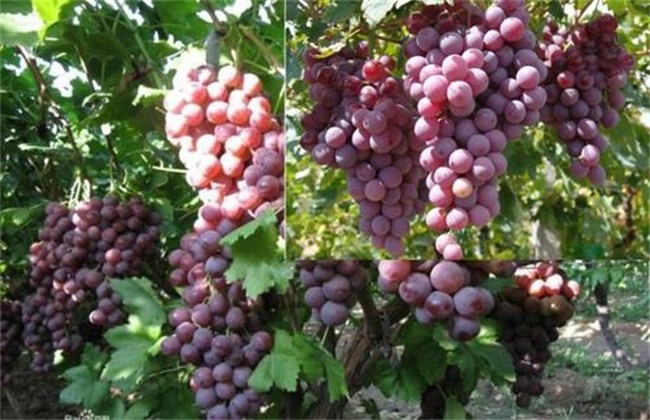
1. Orchard establishment
Fujiminori grape has wide adaptability and is not strict about soil requirements. It has high yield and large berries, so it needs a large amount of nutrients throughout the growing period. The orchard site should be chosen in a place with flat terrain, convenient drainage and irrigation, strong permeability, strong water and fertilizer retention, and sufficient sunlight, preferably sandy loam soil. When establishing the orchard, rows should run north-south, and dense planting should be reasonable, generally with a plant spacing of 1.2 m and a row spacing of 2 m. Before planting, dig the planting trenches, then mix farmyard manure with crushed straw, weeds and soil, and fill it into the trenches, generally applying 2500-3000 kg per mu. After filling level, water it, and planting can be done one week later.
2. Scientific fertilization
The application rate of organic fertilizer should be increased, chemical fertilizers should be reasonably matched, the traditional habit of applying only nitrogen fertilizer should be changed, and formula fertilization should be implemented. Apply base fertilizer before and after grape harvest to promote the recovery of tree vigor, mainly farmyard manure, 25-50 kg per young tree, and 250 kg for every 100 kg of yield for fruiting trees. Topdressing is distributed in the sprouting stage, after flower drop, and before coloring, applied 3-5 times. Young trees are generally applied with 17 kg of nitrogen fertilizer, 8 kg of phosphate fertilizer, and 8 kg of potassium fertilizer per mu; while fruiting trees are applied with 34 kg of nitrogen fertilizer, 25 kg of phosphate fertilizer, and 34 kg of potassium fertilizer per mu. At the same time, spray urea and monopotassium phosphate 4-6 times, respectively before flowering, after flower drop, during the young fruit expansion stage, and during the berry coloring and sugar-increasing stage.
3. Fruit period management
The yield per mu should be controlled at 1500-2000 kg as much as possible. Strong branches should keep 2 clusters, medium-strong branches should keep 1 cluster, and weaker branches should keep no clusters. Cut off new shoots far from the main vine or crossing each other, so that the trellis surface is more orderly. When the berries grow to the size of soybeans, thin out small berries with poor fertilization, underdeveloped berries, deformed berries, and berries damaged by pests and diseases, and keep large berries as much as possible. Bagging can make the fruit surface clean, with bright and beautiful color, and can also prevent fruit pests and diseases. After removing the bags, lay reflective film under the trellis, and remove leaves near the fruit clusters that block light, to promote uniform coloring of the fruit clusters and full coloration.
4. Pest and disease control
When planting, choose varieties with strong disease resistance. Before sprouting after emerging from the soil, spray the whole plant with lime sulfur mixture to eliminate overwintering pathogenic bacteria and overwintering pests, which has a significant effect on reducing diseases throughout the year. Spray Bordeaux mixture once at the flowering stage, which can prevent black pox and downy mildew; when the berries grow to the size of soybeans, spray thiophanate-methyl once, and spray Bordeaux mixture once a week, which can prevent cluster rot; during fruit growth, spray Bordeaux mixture alternately with carbendazim and chlorothalonil, spraying once every half month, which can prevent anthracnose and downy mildew.
The above is an introduction to Fujiminori grape cultivation techniques. I hope it can help you. If you want to learn more related knowledge, please follow us.