Causes and Control Methods of Hollow Tomatoes
Tomato fruits are generally large and round, filled with plump juice inside. But recently some people have found that tomato fruits have turned out hollow, with an empty interior, irregular hollow spaces, no juice or very little juice, and an irregular shape on the outside that is far from round. What is going on here? Let us explore the causes together so we can find the right control methods.
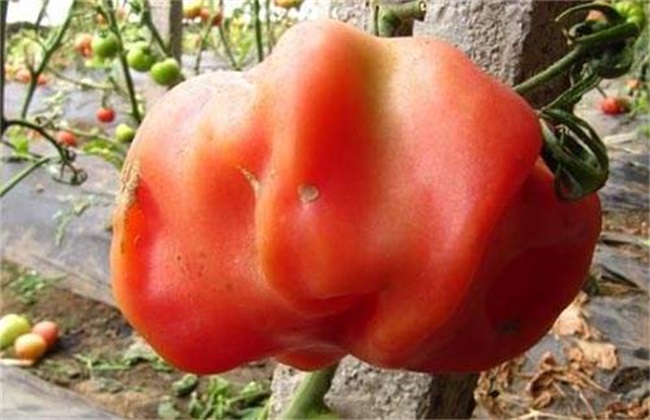
I. Causes
Abnormal placenta development, skin that is too thin, and no seeds; or the skin grows rapidly while the flesh fails to keep up, forming hollow spaces; when the skin grows too fast and the placenta development cannot keep pace, the fruit becomes deformed and hollow; some early-maturing varieties naturally have fewer locules, making them prone to hollowing; low temperatures or extreme high temperatures during the flowering period cause pollen to lose vitality and fertilization to fail, producing deformed fruits; improper use of growth regulators stimulates their formation; poor management, with unbalanced light, water and fertilizer.
II. Preventive Measures
1. Seed selection
Choose suitable varieties. Try not to choose early-maturing varieties; you can choose mid-maturing or late-maturing varieties. Also, you can choose varieties with more locules rather than those with few locules.
2. Temperature
For open-field sowing, choose a temperature suitable for seedling emergence before sowing. The sowing period can be roughly estimated, and then the sowing period determined, which indirectly decides that the flowering period after planting should not be too cold or too hot. In early spring, seedlings can be raised in small arch sheds and planted in greenhouses. In late autumn and winter, protected cultivation is best.
3. Use of growth regulators
To preserve flowers and fruits, some growth regulators need to be used, such as dipping flowers in 2,4-dichlorophenoxyacetic acid. Although the flower-preserving effect is good, it causes the skin growth to lag behind the placenta growth. So it is best to use other spray-type flower and fruit preservatives, such as Tomatotone, which has a good fruit-setting effect.
4. Strengthen management
During the rapid growth and swelling period, poor light and inadequate nutrients lead to unbalanced nutrition in the plant and fruit, and the fruit easily fails to store nutrients and becomes hollow. Insufficient water and fertilizer means nutrition cannot be supplied, causing hollowing. Greenhouse cultivation can automatically regulate light, and fertilizer and water supply should be provided according to the stage.
There are many causes of hollow tomatoes. The three most commonly occurring types of hollowing, and the causes of hollowing, have been roughly summarized in a few points. There may also be other causes, and some other causes may be discovered during production and planting. You can summarize your experience and take targeted preventive measures.