Detailed Explanation of Raspberry Cultivation Techniques, a Step-by-Step Guide to Scientific Planting
Raspberry is a woody plant in the Rosaceae family, also called raspberry, with backward-curving thorns on its branches and aggregate fruit. It has a long history of being cultivated as a fruit in Europe for many years, but in China it is rarely sold directly as fruit; it is mainly used as a traditional Chinese medicinal material after being dried, and its medicinal value is very high. But now there is also a small amount of artificial cultivation, and some cultivation experience has been summarized.
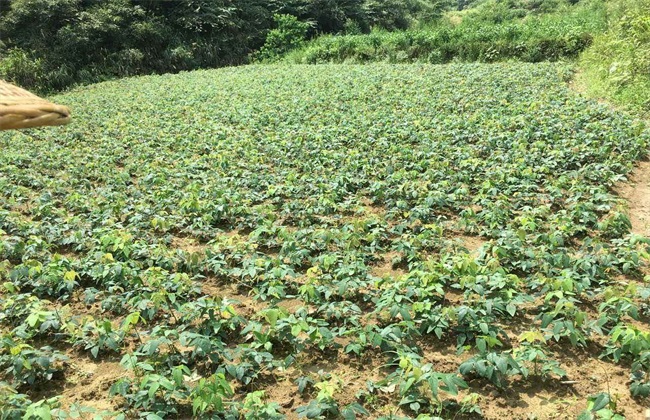
1. Building the Orchard
Choose a south-facing slope for planting, do not plant in a hollow, and plant in a place where there is higher mountainous land in front of the planting site. Do not plant in a mountain basin, where planting is prone to flooding and water accumulation. When building the orchard, plan the overall range, plant small trees as a surrounding barrier, or build a protective fence such as wire mesh. Surrounding weeds and miscellaneous trees should be cut down.
2. Land Preparation
Level the land, then deeply plow and roughly till the land, then apply 2000 jin of farmyard manure, stable manure, and weed compost, bury it into the subsoil layer, then use machinery to rotary till and finely till the surface soil. It is better for the depth of the fine surface soil to reach about 40 cm.
3. Trellising
Raspberry is a thorny shrub with slender branches that tend to droop after fruiting, so artificial cultivation requires timely installation of supports to help keep the plant growing upward. Supports should be set up in the first year of planting, at the beginning of the plant's peak growth period. Generally, cement posts are installed, with several wires stretched horizontally for growth.
4. Water and Fertilizer
Fertilization is carried out at the same time as intertillage and weeding, with one topdressing during the flowering period and one topdressing during the fruiting period. Each fertilization uses 30 jin of urea, 2 jin of borax, and 2 jin of zinc sulfate per mu of orchard. In addition, 2000 jin per mu is applied as base fertilizer in autumn. Water less during the flowering period, keeping basic humidity is enough. After flowering, during the fruiting period, water more, once every two weeks, but not too much, to avoid excessive water causing fruit drop.
5. Pruning
After planting, in the first summer of growth, it will be found that the branches grow numerous and messy, so in summer, excessive vegetative branches should be pruned, and strong branches should be selected as fruiting branches and cultivated as fruiting mother branches. Horizontal branches should be removed, and drooping branches should be adjusted to grow upward. In winter, it is basically thinning out winter shoots, and in the second spring, more new shoots should be retained.
Raspberry cultivation first requires building an orchard, then there are some requirements for the land, and trellising is needed to keep growth upward. Water and fertilizer are key to vegetative growth and fruiting, and topdressing is needed. Pruning is essential for fruit trees with strong sprouting ability.