The correct method and precautions for girdling kiwifruit
Girdling is one of the tasks often carried out in kiwifruit cultivation. It is mainly used to interrupt the transport system of the bark, so that substances synthesized by photosynthesis cannot be transported downward, thereby increasing the accumulation of organic matter in the fruit and achieving the purpose of increasing yield. So how should girdling be carried out? What should be noted when girdling? Let's find out together.
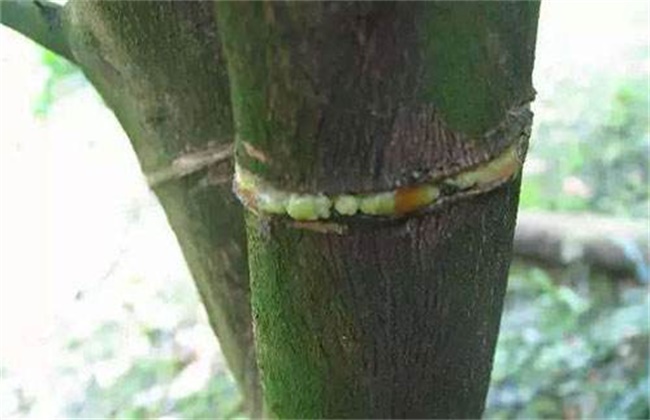
1. Girdling position and tree age
The best choice for the girdling position on kiwifruit is on the main trunk. Generally, girdling is carried out on older trees with vigorous growth. It can be done 1-2 times a year; vigorously growing trees can be girdled 2 times, moderately vigorous trees girdled once, and weak trees and trees affected by pests and diseases are not suitable for girdling. Trees younger than seven years are not recommended for girdling. If friends without experience want to try, they can choose to do it on the primary branch or secondary branch, or girdle two half-circles, staggered opposite each other above and below, with a spacing of 10 cm.
2. Girdling time
Most girdling is chosen in July, when the kiwifruit growth period has mostly entered the sugar conversion stage. At this time, summer shoots grow extremely fast and compete with fruit growth and development for water and nutrients. Therefore, summer pruning generally needs to be done once every half month. Girdling reduces the auxin content and increases ethylene, thereby inhibiting vegetative growth and promoting reproductive growth, which can effectively cap the shoot tips and promote the maturation of branches.
3. Management after girdling
The girdling time is in a high-temperature and high-humidity environment, which is very prone to outbreaks of pests and diseases. Therefore, after girdling, the wound should be bandaged promptly to prevent infection and invasion by pathogens. Girdling can cause yellowing and decline of tree vigor, so during the flower ear emergence stage and fruit expansion stage, fertilizer and water management should be strengthened, with particular attention to applying more foliar fertilizer.
4. Precautions
When girdling, be sure to pay attention to the force used and do not damage the xylem, otherwise it will have a great impact on the transport of fertilizer and water. The recommended girdling width should not exceed half a centimeter, and the distance between two girdlings should be greater than 10 cm. Vigorously growing older fruit trees are suitable for girdling, but orchards with trees under 7 years old are not recommended for girdling, and young trees and diseased trees are not recommended for girdling. When girdling, the tools should be disinfected, and disinfection should be carried out after treating each tree to avoid the spread of diseases between fruit trees. The second girdling should be carried out after the wound from the first girdling has healed. Girdling cannot be done on all branches, and the distance between two girdlings must not be too close, as it is very easy for the bark to peel off.
The above is an introduction to the kiwifruit girdling method and precautions. We hope it can help you. If you want to learn more related knowledge, please stay tuned to us.