Detailed Explanation of Field Management Techniques for Orah Mandarins
Orah mandarin is a type of citrus. Compared with other citrus varieties, it has the advantages of late ripening and high sugar content, early fruiting and high yield, cold tolerance, drought tolerance, few cracked fruits, few dropped fruits, and tolerance to storage and transport. Moreover, its marketing season falls in the off-season for fruit, giving it relatively high economic benefits, which has attracted many people to grow it. So how should Orah mandarins be managed during cultivation? Let's take a look together.
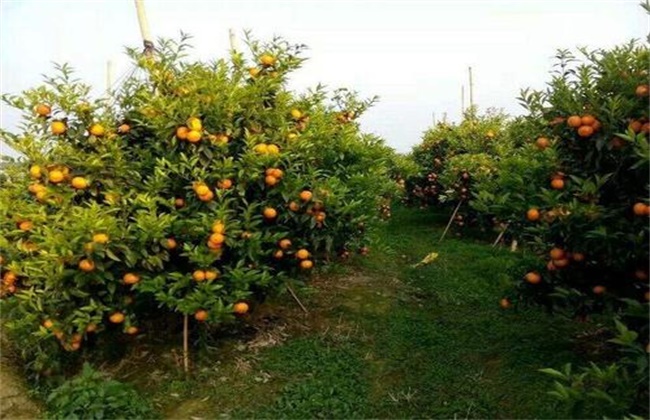
1. Management after planting
After planting, keep the soil moist and do a good job of mulching the tree disk. Half a month after planting, you can drench with dilute compound fertilizer water to promote root regrowth and recovery. For bare-root seedlings, fertilizer can only be drenched after they sprout. Do a good job of trunk setting, shaping, and pest and disease control. For severely wilted leaves, they can all be pruned off, or sealed with microcrystalline wax to reduce water evaporation and help budding and recovery.
2. Management of young trees
Fertilization for young trees should follow the principle of applying little, frequently, lightly, and as water fertilizer. Fertilization should mainly be high-nitrogen fertilizer, and wheat bran water, mineral fulvic acid, or seaweed acid can be added for drenching. The concentration of water-soluble fertilizer can be a 500-1000 times solution. When drenching fertilizer, pay attention to the amount to avoid excessively high acidity burning the roots, and also to prevent overly concentrated fertilizer from damaging the roots. Drainage and irrigation should be done well to avoid fertilizer damage and waterlogging. In winter, apply organic fertilizer heavily to promote tree recovery and nutrient storage. If conditions permit, intercropping or relay cropping with leguminous green manure can be done. For intercropping, avoid tall-stalked crops and those with strong nutrient demands. Distinguish the primary from the secondary, and do not put the cart before the horse. Young trees also need trunk setting, main branch selection, bud wiping, pinching, and heading back to cultivate a good canopy, and pest and disease prevention and control should be done well to protect new shoot growth.
3. Management of fruiting trees
Young fruiting trees have a contradiction between vegetative growth and reproductive growth, so balancing them is the foundation for high yield. When fertilizing, pay attention to the amount of nitrogen fertilizer applied to avoid excessive growth of branches and leaves. Phosphorus and potassium fertilizers should be combined with organic fertilizers to provide sufficient nutrients for flowering and fruiting. Spring is suitable for fertilization; when there are few flowers, balanced fertilizer should be the main focus, and when there are many flowers, nitrogen fertilizer should be appropriately increased. Some young shoots should be properly thinned to reduce the competition for nutrients between shoots and flowers. Pay attention to foliar spraying to speed up the greening of new shoots. In summer, the main focus is fruit retention, shoot control, pest and disease prevention, fruit support, and prevention of water accumulation. In autumn, determine the time for releasing shoots, topdress with quick-acting fertilizer in combination with drought resistance, and prevent and control pests and diseases. In winter, pay attention to leaf drop, low-temperature freezing damage, peel aging, and promoting coloration.
The above is an introduction to field management techniques for Orah mandarins. We hope it can help you. To learn more related knowledge, please stay tuned to us.