Detailed Explanation of Key Points for Perfume Lemon Cultivation Techniques
Perfume lemon is a variety bred in Taiwan, China, so it is also known as Taiwan perfume lemon. It prefers a warm environment, is not afraid of heat, and tolerates cold and shade, making it suitable for cultivation in most parts of China. Compared with ordinary lemons, it has large, beautifully colored fruit and no bitter taste in the peel, making it suitable for juicing. So how should perfume lemon be cultivated? Let's take a look together.
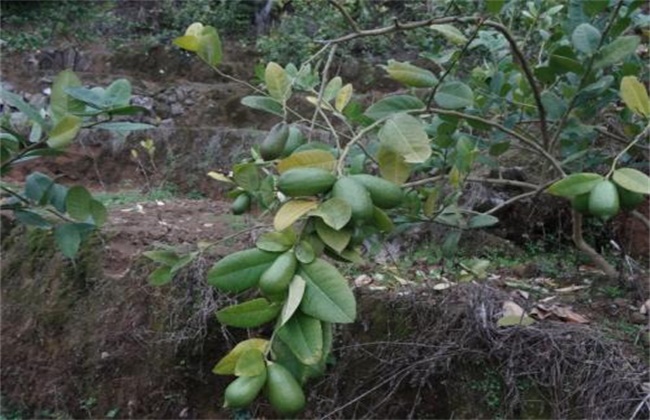
1. Planting
Perfume lemon prefers a warm environment. In areas with short periods below minus 8 degrees and periodic freezing disasters, it is best not to cultivate it in the open field. It has low requirements for soil and terrain. Choose seedlings that are currently growing vigorously and free from pest and disease damage. The planting spacing is 3×2.2 m. When planting, appropriately prune the leaves, dip the roots in a rooting agent mixed with yellow mud slurry, fill with fine soil and compact it, water thoroughly to settle the roots, and cover the tree basin to retain moisture to help survival.
2. Fertilizer and Water Management
Because perfume lemon is a fibrous-root crop, fertilization is best done with light and frequent applications, and well-decomposed organic fertilizer is best. This way the fertilizer is slightly acidic, which is beneficial for root absorption and will not burn the roots. In the first and second years after planting young trees, apply nitrogen fertilizer as a topdressing to promote canopy formation and branch and leaf growth, but afterward control the application of nitrogen fertilizer and increase the application of compound fertilizer. In autumn, use organic fertilizer as the base fertilizer, combined with foliar fertilization during the growing season, to strengthen tree nutrition and promote flower bud formation and flowering and fruiting. The key fertilization periods for perfume lemon are the fruit expansion stage after flower drop and the autumn shoot sprouting stage. Farmyard manure can be applied, and urea and phosphorus-potassium fertilizer can often be applied as topdressing according to growth conditions. Chemical fertilizers should be applied diluted with water, controlling it to once every 10 days, with a small amount each time.
3. Cultivation and Weeding
In dry summer and autumn seasons, cultivate before the drought to keep the soil loose and reduce water evaporation. In summer, leguminous green manure can be planted between fruit tree rows to prevent soil erosion. At the same time, pay attention to weeding, and cover the tree basin with weeds to reduce weed growth.
4. Pests and Diseases
The main disease of perfume lemon is gummosis, which generally has its peak incidence from April to October. It is most severe in high-temperature and humid environments. It mainly damages the trunk and can also endanger the main branches. When the disease occurs, water-soaked brown lesions appear on the diseased parts, often cracking and exuding gum. Leaves turn yellow and fall off, and tree vigor declines. For prevention and control, pay attention to timely orchard management, reduce orchard humidity, increase boron fertilizer application, use root drenching and foliar spraying methods, and combine with early spring pruning to cut off diseased and pest-damaged dead branches, dig out dead trees, and reduce pathogens.
The above is an introduction to perfume lemon cultivation techniques. We hope it can help you. To learn more related knowledge, please keep following us.