What are the precautions for growing Gonggan mandarins?
Gonggan mandarin is known as the "king of mandarins" and is a fruit that combines the best qualities of oranges and mandarins, being a hybrid of mandarin and orange. It has a long history of cultivation in our country, and in ancient times it was even a tribute offering reserved for emperors. So what should you pay attention to when growing Gonggan mandarins? Let us learn about it together.
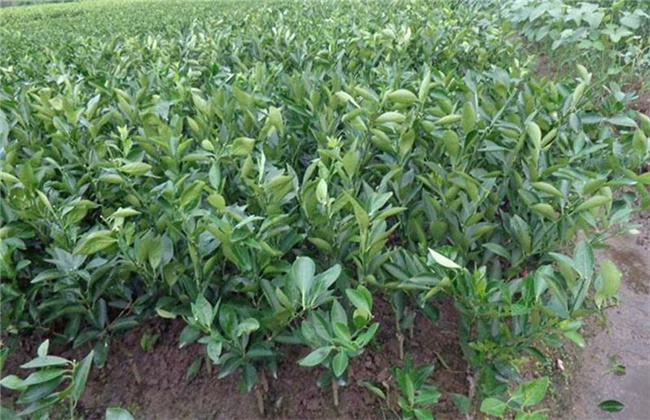
1. Planting
First, we should select seedlings with well-developed roots, thick and strong growth, no pests or diseases, a height of about 60 to 80 cm, and relatively thick stems. Before planting, the branches and leaves of the seedlings should be properly pruned. When planting on flat land, the row spacing is generally 3 m and the plant spacing 2 m, while on sloping land the row spacing is generally 3.5 m and the plant spacing 2.5 m. The planting time is generally at the Spring Festival when buds sprout each year and around October to November in autumn. After planting, water appropriately.
2. Management of young trees
The management of young trees is aimed at promoting the growth of branches and leaves, so the fertilizing principle is to apply frequent but light fertilizer. About ten days after planting, fertilizer should be applied once, mainly nitrogen fertilizer, to strengthen the shoots. One month after planting, an appropriate amount of urea should be applied as a top dressing, diluted with water for irrigation, so as to avoid fertilizer that is too concentrated and damages the roots. At least 5 to 6 top dressings should be applied each year, and the fertilizer concentration should gradually increase as the young trees grow. By the second year of fertilization, in addition to nitrogen fertilizer, an appropriate amount of NPK compound fertilizer should also be applied as a top dressing. In the third year, compound fertilizer should be the main type, combined with organic fertilizer.
3. Pruning
To promote earlier fruiting and high yields, proper pruning is indispensable. Control the growth at the top, and use the methods of wire-guided shaping and bud removal to control shoots for pruning and shaping. There are mainly three tree forms for pruning: first, the natural open-center form; second, the modified central leader form; and third, the natural round-headed form. Shaping and pruning should begin with young trees to develop a good tree form, so as to obtain a tree appearance with high and stable yields. This makes the trunk relatively short, with many side branches that are appropriately spaced and evenly distributed, and the branches and leaves inside the canopy relatively dense and uniform while the outside is slightly sparse, with a large number of leaves.
4. Management of mature trees
For mature trees, fertilizer is used to promote the growth of branches and leaves and to increase fruit production. After maturity, fertilizer is broadcast four times a year. The first time is in spring when buds sprout, mainly nitrogen fertilizer; the second time is before flowering, mainly phosphorus fertilizer; the third time is after flowering, to promote fruit enlargement, mainly potassium fertilizer and phosphorus fertilizer; and the last time is after harvesting, in order to protect and strengthen the fruit trees, mainly organic fertilizer. In addition, water must be controlled, especially during fruit development; there must not be too much or too little water, otherwise the fruit will crack. In the later stage of fruit growth, water should be controlled to accumulate more sugar.
The above is an introduction to the precautions for growing Gonggan mandarins. We hope it can help you. If you want to learn more related knowledge, please stay tuned to us.