What are the precautions for fertilizing fruit trees?
The growth and development of fruit trees cannot be separated from fertilizer, and all kinds of fruit trees have their own developmental patterns and growth patterns. How to fertilize according to the growth and development patterns of fruit trees is the key to achieving high yields. However, some fruit growers often encounter various problems because of improper fertilization. Let's take a look at the precautions for fertilizing fruit trees together with the editor below.
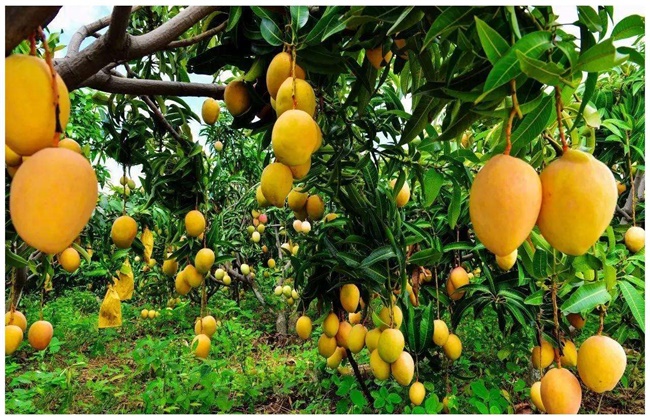
1. Blind fertilization
The growth and development of fruit trees have their own natural laws: sprouting in spring, growing in summer, harvesting in autumn, and storing in winter. For example, the nutrients absorbed and stored from September to November before winter are stored in the tree body, wood, flower buds, and roots for use in flowering and fruiting the following spring. However, many fruit growers do not water or fertilize for a long time, which affects nutrient storage and the next year's production. In planting management, they act based on their own feelings. When it is time to water and fertilize, they do not water or fertilize; when it is not time to water and fertilize, they water and fertilize indiscriminately. This can lead to an imbalance between reproductive growth and vegetative growth of fruit trees, causing excessive growth of branches and leaves, a falsely vigorous tree body, and a large amount of physiological fruit drop.
2. Single-type fertilization ⟧7⟧Many fruit growers, for convenience, lack knowledge about fertilizing fruit trees and apply only a single nitrogen-phosphorus-potassium compound fertilizer or only organic fertilizer when fertilizing. This can cause fruit trees to lack various elements such as calcium, magnesium, sulfur, boron, silicon, iron, and zinc during growth, resulting in various diseases such as yellow leaf disease, little leaf disease, black spot disease, and rot disease. The correct fertilization method should be based on nutrient conditions, mixing well-decomposed organic fertilizer with nitrogen-phosphorus-potassium compound fertilizer, trace elements, and biological bacterial fertilizer, so as to meet the needs of fruit tree growth and development and obtain high yields.
Many fruit growers, for the sake of convenience, will, when water is scarce, apply only a single NPK compound fertilizer or only organic fertilizer when fertilizing fruit trees. This causes the trees to lack calcium, magnesium, sulfur, boron, silicon, iron, zinc and many other elements during growth, leading to various diseases such as yellow leaf disease, little leaf disease, black spot disease and rot disease. The correct fertilization method should be based on the nutrient status, mixing well-composted organic fertilizer with NPK compound fertilizer, trace elements and biological bacterial fertilizer, so as to meet the needs of fruit tree growth and development and achieve high yields.
3. Improper fertilization timing
September to November is the peak period of fertilizer and water demand for fruit trees. At this time, first, the fruit needs to expand; second, it needs to color; third, it needs to provide nutrients required for flower bud differentiation; and it also needs to provide various nutrients for the tree body to store nutrients. However, many fruit growers, fearing that a small amount of fruit will be knocked off, do not fertilize or water, postponing the golden period of fertilization to November or even February to March of the following year. According to data, the nutrients stored in the tree body from September to October account for 80%-85% of the whole year, while from November to December, because the temperature is lower, root growth stops, and the water absorption rate is lower. When fertilizing at this time, the nutrient storage of fruit trees accounts for only 65%-70%, affecting the next year's yield.
4. Fertilizing too deeply
Many fruit growers do not consider variety and tree age when fertilizing, and do not pay attention to scientific and reasonable methods when fertilizing. They apply fertilizer as deeply as possible. For crop growth, fertilizer and water, light, and temperature are all indispensable. Most roots are concentrated in the 20-30 cm soil layer. This is the concentrated area for absorbing nutrients. Some fruit growers apply fertilizer as deep as 80 cm, and some even more than 1 m. Once watered, nutrients seep downward with the water into lower layers, and the roots simply cannot absorb them, causing waste of fertilizer. Therefore, fertilizer is generally applied to a depth of 15-20 cm, and then watered after application. After the water seeps down, it just combines with the roots, achieving twice the result with half the effort.
The above is an introduction to the precautions for fertilizing fruit trees. We hope it can help you. To learn more related knowledge, please keep following us.