A detailed guide to soilless strawberry cultivation: all the planting methods are right here
Strawberry is a very popular fruit with large market demand, high market prices and considerable economic value. Nowadays more and more people are growing strawberries, and strawberry growing models keep emerging one after another. In recent years, the most popular growing model has been soilless cultivation. So how should strawberries be grown soillessly? Below, the editor brings you the soilless cultivation techniques for strawberries. Let's take a look!
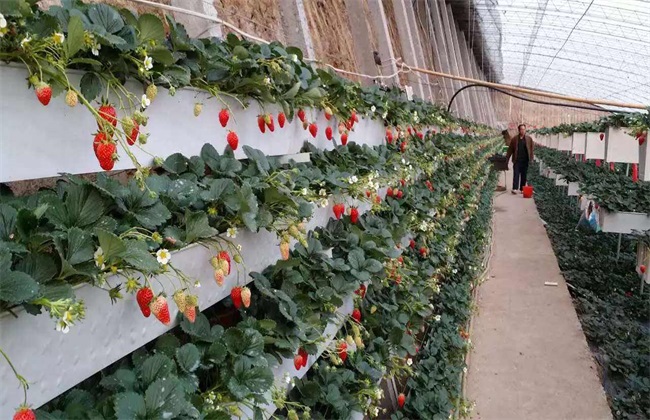
1. Cultivation facilities
Soilless strawberry cultivation is mainly based on cultivation troughs, and strawberry cultivation troughs are divided into dug-down type and high-ridge cultivation troughs. When carrying out soilless cultivation, we should choose according to various factors such as our own growing habits and the local environment. For dug-down cultivation, the cultivation trough should retain a walkway of about 75 cm before digging. The width of the cultivation trough should be controlled at about 50 cm, and the depth should be controlled at about 18 cm. The length depends on the size of the greenhouse, and a walkway of about 50 cm should be retained between cultivation troughs. If high-ridge cultivation troughs are used, they are generally built up with bricks.
2. Preparation before planting
Before planting, we must first select good varieties; varieties suitable for soilless cultivation include Hongyan and others. Then about 3 days before planting, do a good job of insecticidal and sterilization work to reduce the harm of pests and diseases after planting. After sterilization, pay attention to watering once to avoid injuring the seedling roots when lifting the seedlings, then do a good job of grading and carry out planting in separate greenhouses. Then we should pay attention to adjusting the planting time well; generally planting around September each year can achieve the purpose of off-season sales. Finally, when planting, pay attention to controlling the planting density well, with a plant and row spacing controlled at about 30*10 cm.
3. Planting method
When planting, we should pay attention to the weather and must not plant on a sunny day. It should be done on cloudy days or in the evening or on partly cloudy days. When planting, select good seedlings; ensure the seedlings are strong ones free of pests and diseases, with thick glossy leaves and well-developed roots. Remove old and weak leaves, keep about 3 new leaves per seedling, and then cut off part of the root system to avoid excessive water evaporation. When planting, also pay attention to the planting depth; keeping it level with or slightly higher than the cultivation surface is enough. After planting, water promptly to promote seedling recovery and improve the survival rate of the seedlings.
4. Water and fertilizer management
In soilless strawberry cultivation, the watering method should be changed to drip irrigation under film, which can not only avoid wasting too much water but also avoid increased humidity and reduce the incidence of pests and diseases. Throughout the entire growth period of strawberries, the growing substrate should remain moist; substances such as sesame residue in the substrate can meet the nutritional needs of strawberry growth. However, in order to improve the fruit-setting rate of strawberries, after the first harvest of the main flower spike, an appropriate amount of farmyard manure should still be applied, with the amount well controlled, and potassium fertilizer should be appropriately increased to raise the sugar content of the strawberries.
The above is a brief introduction to soilless strawberry cultivation techniques. There are many strawberry cultivation models, and the main thing is to choose reasonably according to everyone's growing habits. That's all for today's introduction. This article is for reference only, and I hope it can help everyone!