How to grow horned melon? Full analysis of planting time and methods
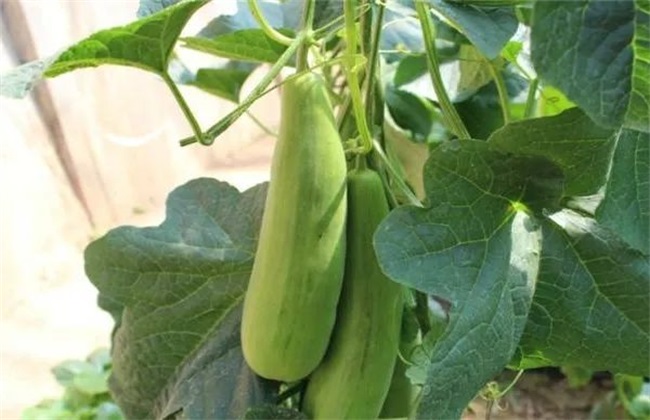
Horned melon is a new variety of melon that has only recently begun to appear on the market. It won people's affection as soon as it hit the market, and its price rose quite a bit. Because it is an early-maturing variety, it reaches the market earlier than regular melon and therefore brings better returns. As for why it is called horned melon, it is because the fruit is slender and shaped like a horn. Today we mainly introduce the specific planting methods for horned melon; please keep following the content below.
I. Planting time
Generally, planting is done in March and April of spring, requiring temperatures to rise again; it can be planted when the temperature is roughly above 15°C. At this time the sunlight is also relatively abundant. For protected cultivation, planting can mainly begin in November of autumn; at this time the outside temperature is similar to the spring temperature, suitable for seed germination, and sowing at this time allows harvest in spring and an earlier market launch.
II. Planting methods
1. Seed selection and treatment
Choose varieties that are not prone to deformity and skin cracking for planting; it is best if they have strong adaptability and vigorous growth and sprouting ability, and above all they must adapt to the local climate and environmental conditions. Before sowing, the seeds need to be selected for plumpness, then soaked in 590°C hot water for 20 minutes while stirring constantly to avoid scalding. Then wash them clean and drain them, wrap them in a clean, moistened cloth, and place them in an incubator for germination. At a temperature between 28 and 30°C, it is best to take them out and rinse them once a day to avoid secreting mucus that rots the seeds.
2. Sowing and raising seedlings
Since the seeds are relatively large, seedling pots can be used for raising seedlings. Prepare river sand, compost made from humus and grass, vermiculite, and soil, disinfect them, and use them after drying in the sun for a few days. Generally sow 1 to 2 seeds per small pot and cover with 1 cm of soil. Spray water until water flows out of the drainage holes, then stop watering. Place in a cool place, shade and keep moist.
3. Transplanting
Transplanting can be done once the leaves have grown to three true leaves, at a height of about 10 cm, so the planting time in each place will vary according to growth. For planting, ridge rows must be made, with ridge row width of 30 to 40 cm. The adjacent ditch is 20 cm deep. The transplanting plant spacing is 30 cm and the row spacing is 40 cm. Before transplanting, apply about 30 jin of farmyard manure per plant, and later apply other compound fertilizers as topdressing.
4. Seedling stage management
After emergence, check the seed emergence rate, then remove any that are thin and weak, diseased, or yellowed. Then water daily to promote growth. After transplanting, the seedlings need to recover; during the recovery period, apply some nitrogen fertilizer water to restore growth momentum as quickly as possible. Sometimes there will be brief water loss, so it is best to water little but often.
One problem with growing horned melon is that it cracks easily; the rind is relatively brittle, so this problem must be noted when planting, and more potassium fertilizer should be applied. Choose better varieties.