Detailed Explanation of Key Techniques for High-Yield Dragon Fruit Cultivation
Dragon fruit originates from the tropical desert regions of Brazil. In China, mainly improved varieties are grown, cultivated in Taiwan, China, Hainan, and the Guangdong-Guangxi region. It is loved by people for its refreshingly sweet flesh and rich nutrition. Dragon fruit can only be grown in tropical regions. Today let us take a look at what specifically needs to be done to cultivate dragon fruit in this tropical environment, and learn about it.
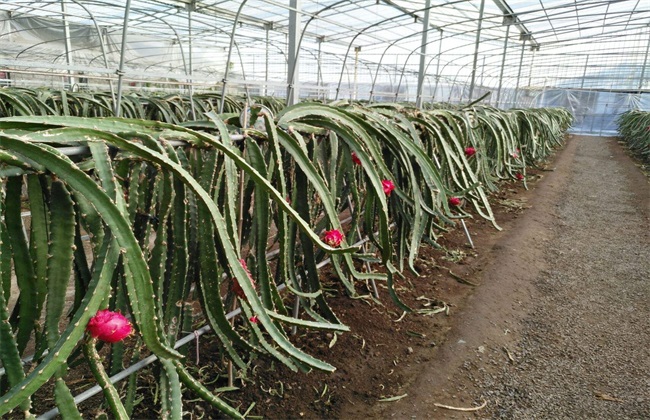
I. Environmental Requirements
Choose a broad, flat location with no tall trees around to block it, and the terrain should be slightly elevated. It should not be directly by the seaside or similar. The soil should be deep and loose, able to retain fertilizer and water. The soil should not have a lot of sand, as it dries out easily; it needs to retain moisture. It requires an annual average temperature above 20 degrees, preferably with no low temperatures; if there are, they should not go below 10 degrees.
II. Selecting Good Varieties
Choose varieties with strong growth vigor, good sprouting ability, and broad adaptability, preferably varieties with large fruit, high yield, and easy survival, such as
III. Preparation
Start plowing the soil one month before planting, plowing relatively deep, about 1.5 m, with the upper layer of broken soil plowed about 30 to 40 cm. Drainage ditches should be dug around the entire plot, and ditches should also be dug separately in the middle. Ridges are made 40 cm wide, with ditches 20 cm wide. Set up cement trellises 1.5 m high, with a plant-to-row spacing of 2 m. Apply 30 jin of farmyard manure per plant.
IV. Seedling Raising and Field Planting
Asexual propagation: use current-year fleshy stems, cut into 20 cm segments, air-dry in a shady place for 3 days, then insert cuttings. Insert cuttings 5 cm deep, with a plant-to-row spacing of 20 cm, apply fertilizer water once, and after two months, once mature, transplant. Plant in spring and autumn, at a depth of 8 cm, about 500 plants per mu, and just water to keep moist.
V. Field Management
After field planting, apply 6 jin of 0.5% compound fertilizer solution per plant, then once every half month thereafter. Stop in November and switch to foliar spraying. In winter, apply a large amount of base fertilizer: 1300 jin of farmyard manure and 100 kg of compound fertilizer. In the second spring of planting, carry out intertillage and weed control, water once a month, and thereafter apply base fertilizer every December: 1000 jin of barnyard manure, 200 jin of phosphate fertilizer, and 4 jin of borax.
In cultivating dragon fruit, the main things are to meet the cultivation environment requirements, select cultivation varieties, do the preparation work well, and ensure nutrient and water supply after field planting. Provide the best possible growing conditions in every way.