How to Fertilize Young Longan Trees? Detailed Explanation of Key Fertilization Techniques
The management of young longan trees focuses mainly on promoting branch and shoot growth and expanding the canopy, so to meet their growth needs, fertilizer must be applied in sufficient amounts. So how should young longan trees be fertilized? Let's find out together.
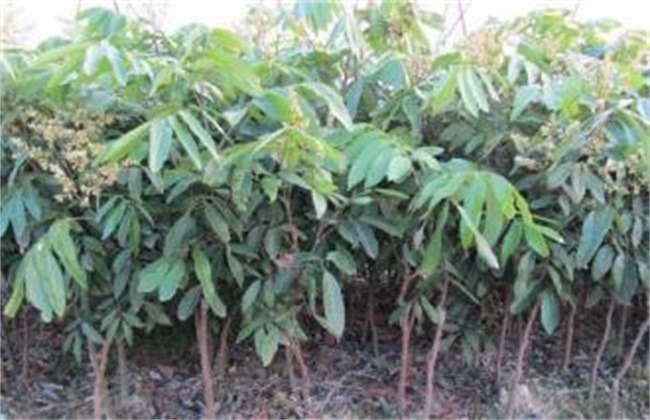
1. Root Fertilization
Newly planted seedlings can be fertilized once they have grown new roots. Since seedlings tend to sprout before developing roots after planting, fertilizer should be applied once when the new shoots turn green and mature. However, perennial seedlings have underdeveloped root systems, so fertilizer should be applied lightly, preferably diluted with water and poured on, to facilitate root absorption. In the year of planting, water and fertilize once every half month, mainly with thin manure, or alternatively with low-concentration urea and compound fertilizer solution. After 2 years of planting, apply topdressing twice: once before new shoots sprout to promote shoot growth, mainly with nitrogen fertilizer, and once when the new shoots turn green to strengthen the shoots, mainly with phosphorus and potassium fertilizer. Liquid fertilizer can be poured directly, while chemical fertilizer can be applied in ring-shaped trenches dug along the drip line of the canopy. The amount of fertilizer depends on the size of the plant. For shoot-promoting fertilizer, apply 5-10 kg of diluted human manure per plant; for shoot-strengthening fertilizer, apply 0.05-0.15 kg of compound fertilizer per plant.
2. Foliar Fertilization
Foliar fertilization involves spraying liquid fertilizer onto the canopy of longan trees. Leaves are the absorbing organs, and the leaf underside has numerous stomata, which are the main sites for absorbing foliar fertilizer, while the leaf surface has a cuticle layer with greater absorption capacity, so when spraying foliar fertilizer, attention should be paid to spraying the leaf underside. Foliar fertilizer has the advantages of strong absorption and high fertilizer utilization rate, and can to a certain extent meet the plant's nutrient needs during specific growth and development periods. Foliar fertilization of young trees is usually combined with insecticide spraying, and can involve spraying 0.3% potassium dihydrogen phosphate, 0.3-0.5% compound fertilizer leachate, and organic fertilizer compost liquid, etc.
3. Deep Plowing and Soil Improvement
Young trees can undergo deep plowing and soil improvement in the year of planting. The method is to dig outward from beside the planting hole, widening by 0.4 m and reaching a depth of 1.6 m, with the length depending on the specifications of the planting hole. Trenches can be dug on both sides of the young tree for soil improvement, or along any side of the planting hole. However, care should be taken to connect the soil improvement trench with the planting hole, without leaving any separating layer, so as not to affect root growth. When digging trenches, if longan roots are encountered, they should be cut promptly to encourage new root growth. Young trees can begin deep plowing and soil improvement. When digging soil improvement trenches, topsoil and subsoil should be piled separately. Weeds, crop straw, green manure, etc. should be placed in the lower layer of the trench, and lime should be spread in layers at a rate of 0.5 kg per sq m.
The above is an introduction to fertilization techniques for young longan trees. We hope it helps you. For more related knowledge, please stay tuned to us.