Detailed Guide to Crabapple Cultivation Techniques: Key Points for Planting and Management
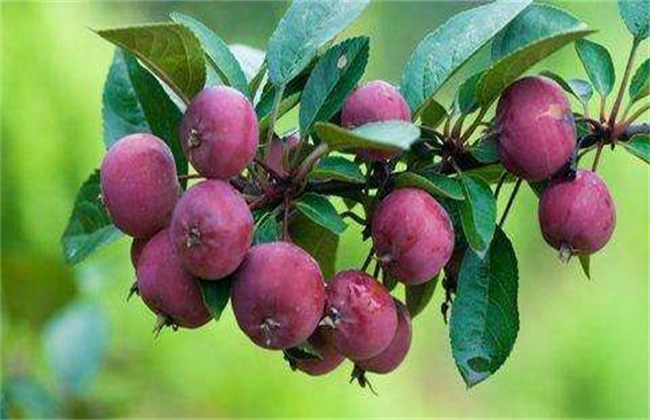
The crabapple fruit is the fruit of the crabapple tree. In the south, crabapple is generally planted and used as a common ornamental flowering tree, but in the north, crabapple is an important fruit tree. The crabapple fruit tastes sweet and sour, with a rich color, aroma, and flavor. The fruit can also be used as medicine, so it is a very good fruit to cultivate. What methods and measures are there specifically for cultivating crabapple fruit, how should cultivation management be carried out, and how can crabapple fruit grow well? Please continue reading the content below.
1. Preparation Work
Plant in November in autumn or March in spring. For planting distance, on sloped land use a plant spacing of 2.5 m and a row spacing of 3 m; on flat land use a plant spacing of 3 m and a row spacing of 4 m. Dig planting holes. Generally, the depth and width of the planting hole are about 3 times that of the trunk. The seedling height should be more than 1 m, the thickness should be about 0.8 cm, and there should be more than 5 strong buds on the main trunk. Also, the subsoil dug out should be mixed with fertilizer and backfilled, and the topsoil should be used as the final cover. Before planting, soak the roots in Bordeaux mixture for disinfection.
2. Planting
Mix the subsoil with organic fertilizer and backfill it, about 30 jin of farmyard manure per tree, then backfill the topsoil. After filling, dig a planting hole in the topsoil, about 30 cm deep, plant in the center, spread out the root system, and place it in gently. Then cover with 10 cm of soil. After treading the soil, gently lift the seedling and then cultivate soil up to ground level. After watering thoroughly, it will sink somewhat, then cultivate soil up to the root crown.
3. Strengthen Management
During the summer period when weeds grow wildly, pull them out in time. If the grass is tall, it can be cut with a knife, composted into fertilizer, and then applied. At the same time, the soil can be loosened a little, which conveniently buries the weeds underground. Mainly apply farmyard manure, primarily by digging ring-shaped trenches for fertilization. Generally, about 60 jin of fertilizer is applied per tree. After new shoots emerge, apply compound fertilizer in holes, 5 jin per plant. Under normal weather, if the soil has sufficient moisture, do not water; water once a month. If there are consecutive sunny days, water in the evening. This helps absorption.
4. Disease and Pest Control
The main disease is brown spot disease. In the early stage, control it with 80% mancozeb wettable powder at 600 times dilution. This agent can also control aphids at the same time. In the middle stage, use 75% chlorothalonil wettable powder at 750 times solution for control. In the later stage, use 70% thiophanate-methyl wettable powder at 700 times solution for control. If disease occurs after harvest, use 25% prochloraz emulsifiable concentrate at 1000 times solution for control. The main pests are aphids and thrips. First prune off diseased branches, then use 0% imidacloprid water-dispersible granules at 5000 times solution or 50% pymetrozine wettable powder at 1500 times solution for spray control.
The main content of crabapple cultivation is preparing seedlings and planting them, carrying out management and maintenance after planting, and paying attention during the growth period to preventing disease infection. This involves very detailed management, with many meticulous points that need to be carried out carefully. Thank you for reading. If you want to learn more, please continue to follow us.