What are the control methods for papaya mosaic disease?
The whole papaya plant is a treasure, with high nutritional value, but when growing papaya, special attention must be paid to the harm of pests and diseases, especially the harm of papaya mosaic disease, which has a huge impact on yield and quality. Below, the editor will introduce the control methods for mosaic disease, hoping to help everyone.
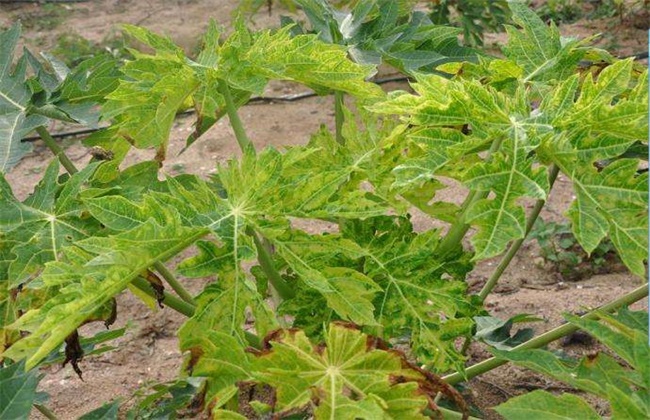
1. Disease symptoms
Papaya mosaic disease generally appears 2-3 years after papaya planting. The disease is spread by aphids, and the incubation period can last up to half a month. The symptoms appear in all parts of the papaya plant. When leaves are affected, the veins of young leaves shrivel, the leaf margins and tips curl downward, and the base of the petiole shows dotted or striped water-soaked lesions. In the middle stage of the disease, yellow spots appear at the top, and the veins become chlorotic and appear as transparent dots. In the late stage of the disease, the upper young leaves become transparent, the middle leaves become mottled, the veins show water-soaked net-like patterns, and the entire leaf becomes uneven, with the growth of the terminal leaves inhibited. When the stem is affected, the young stem at the top shows striped or blocky water-soaked areas; after flowers and fruits are infected, the petals show water-soaked lesions, and in severe cases the normal petals become deformed. Lesions on the fruit are only gradually seen after the fruit expands, appearing as circular or oval concentric rings, and in severe cases irregular wart-like growths appear on the fruit surface.
2. Control methods
1. Shorten the growing period
Papaya is a perennial fruit tree, and mosaic disease generally appears only after 2-3 years of planting. If annual cultivation is practiced, the occurrence of this disease can be avoided.
2. Strengthen orchard management
Papaya plantations are best managed with crop rotation, and new orchards should be opened up as much as possible. Strengthen fertilizer and water management in the orchard, drain accumulated water promptly in summer, and provide moderate drought resistance during dry periods. At the same time, appropriately increase the application of phosphorus and potassium fertilizers and farmyard manure to improve the plant's disease resistance, promote early flowering and fruiting, and early harvesting, so as to achieve harvesting in the same year as planting and reduce the harm of mosaic disease.
3. Orchard sanitation
Plant in spring, and harvest in autumn. After harvesting, cut down the plants immediately. During winter orchard sanitation, spread a layer of lime powder over the whole orchard or spray a single application of lime sulfur mixture, which can prevent the reproduction of pathogens.
4. Control
Timely control of aphids can reduce the spread of this disease. When aphids are found, dimethoate emulsifiable concentrate can be sprayed to kill them. In the early stage of the disease, remove diseased leaves and fruits promptly to reduce the spread of the disease. Apply medication promptly in the early stage of the disease, generally spraying once every 5-7 days, with 3-4 consecutive applications. Commonly used agents include ningnanmycin aqueous solution, mixed fatty acid aqueous emulsion, and moroxydine hydrochloride · copper acetate.
The above is an introduction to the control methods for papaya mosaic disease. I hope it can help you. To learn more related knowledge, please follow us.