Detailed Explanation of Key Points for High-Yield Jackfruit Cultivation Techniques
Jackfruit is a tropical fruit with a unique taste and flavor. It requires a high-temperature, humid environment to grow, and is a seasonal fruit in summer. The seeds in the middle of the fruit can also be used as medicine. It is very popular among a large number of people in the market, and the amount cultivated is also increasing. Cultivation experience is very rich. Today, the main purpose is to introduce the specific cultivation techniques of jackfruit to farmers who want to grow it.
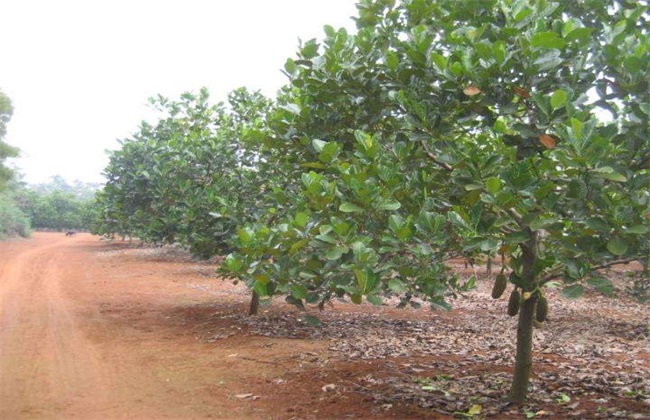
I. Orchard Requirements
The orchard should be established on gentle slopes of small hilly terrain, not in large fields or low-lying areas. The soil is required to be moist, fertile, loose, and deep, with no stones or sand hindering root growth. Transportation should be convenient, water sources sufficient, and it should not be planted in wind gaps to prevent typhoon damage.
II. Planting Density
Planting generally uses a spacing of 6 m between plants and 6 m between rows. Because the tree form is relatively tall, the planting density is relatively sparse. Do not plant too densely, as this affects growth. Relatively flat land can be planted more sparsely, while sloped land can be planted more densely.
III. Tree Structure Adjustment
Young trees need trunk training, and after trunk training, lateral branches, fruiting mother branches, and fruiting branches should be retained level by level. Generally, 3 to 4 main branches are retained at a 40-degree angle. Afterward, branches gradually increase and the angle narrows. Continuously thin out and retain branches, and renew them. For mature trees, prune in summer, cut vigorous water sprouts, thin out shoots, remove buds, and thin flowers and fruits. In winter, clean the orchard and prune dead branches and diseased fruits.
IV. Water and Fertilizer Management
Young trees are fertilized in all four seasons. Apply compound fertilizer once each in spring, summer, and autumn, about 80 g per tree each time. In winter, mainly apply farmyard manure, 8 to 10 jin per tree each time. For fruiting trees, apply flower-promoting fertilizer, 30 jin of compost per tree; fruit-strengthening fertilizer, 1 jin of potassium chloride per tree, and spray 0.2% potassium dihydrogen phosphate. After fruit picking, apply 2 jin of compound fertilizer, 1 jin of phosphate-magnesium fertilizer, and 10 jin of grass compost per tree. The main watering period is during the fruiting period, watering once a week. At other times, water according to how dry the soil is. The amount of water should be relatively large, but drainage is also needed after rain.
Because jackfruit has a tall tree form, it requires much more nutrients and sufficient water, a reasonable planting density, and key management during the fruiting period. Prune the fruit trees to improve the vegetative growth environment.