Detailed Guide to Apricot Cultivation Techniques: Master the Key Points of Growing Apricot Trees
The apricot tree is a small tree with juicy fruit and edible kernels, and it can be cultivated over a wide range, even at an altitude of 3000 m. It is nutritious, and the apricot tree also provides good timber, making it an excellent cash crop. There are some things to pay attention to when growing apricots, along with a specific process. In addition, there is the question of what management tasks apricot cultivation involves, and these are explained in detail below.
1. Planting
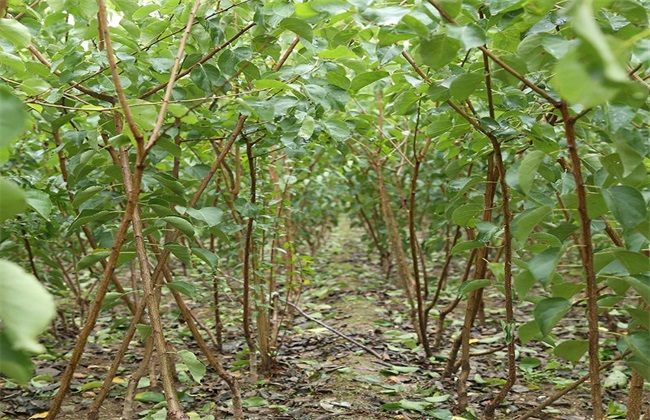
In a dry, flat place with convenient drainage and irrigation, choose deep, well-drained, breathable sandy loam soil that is not compacted or heavy clay. Dig planting holes about twice the size of the root ball, with a plant spacing of 2 m and a row spacing of 3 to 4 m. Apply about 20 jin of farmyard manure per planting hole. Mix it with the soil, then cover with 10 cm of soil, place the seedling in, and backfill. When the soil is nearly level with the ground, lift the seedling slightly, then backfill again. After firming it by treading, water so the soil settles, then mound soil up to the root crown. Remove two-thirds of the leaves from the planting stock and cover with a shade net.
2. Fertilization and Irrigation
At the start of bud break, apply urea; when new shoots grow, apply a quick-acting fertilizer; for the leaves, spray foliar fertilizer, mainly monopotassium phosphate and urea. During flowering and fruiting, apply more potassium sulfate fertilizer; at full fruit stage, spray a yield-increasing bacterial agent; after harvesting, apply a large amount of farmyard manure, which serves as winter cold protection fertilizer and also replenishes the tree's nutrients. However, newly planted trees do not bear fruit in the same year, so the main focus is applying farmyard manure and nitrogen fertilizer to promote growth. As for watering, after planting, water once every three to four days to help restore growth; after one month, water once every half month, adjusting according to soil conditions.
3. Plant Pruning
Once the planted tree has recovered and the shade net is removed, you can set the trunk height, setting it at 1 m above the ground. Leave shoots at separated angles, about 8 to 10 of them; when they grow to half a meter long, select 5 branches for key training, and promote the rest to send out new shoots. Keep pinching to encourage shoots and cultivate several grades of branches, maintaining good angles and removing dense branches. For fruiting trees, the main task is pruning dead branches, diseased and pest-damaged branches, dense branches, and slender branches to improve the canopy structure, then cultivating fruiting branch groups, and then renewing roots and shoots. For aging trees, carry out heading back and root cutting to renew and rejuvenate them, removing the weak and keeping the strong, and re-cultivating fruiting branches.
4. Other Management
High humidity is unfavorable for flowering, pollination, and fertilization, and the fruit set rate declines, so manual pollination can be done on sunny days. In hot summers, after rain, pests and diseases tend to break out, so promptly prune out diseased and pest-damaged branches and then spray to sterilize and kill insects to prevent losses. Receiving enough light helps fruit expansion and improves quality. Ensure the supply of different nutrient requirements at different stages.
Apricot cultivation is mainly managed by dividing trees into young trees, fruiting trees, and aging trees, with some different management priorities, and management must be emphasized. But this is also the growth process of the apricot tree: management starts with the young tree, and the key management points gradually change. Cultivation is not just planting; how to make it grow well after planting is the focus of cultivation techniques.