A Detailed Guide to Star Apple Planting Techniques and Management Methods
The star apple is a plant in the genus Chrysophyllum of the family Sapotaceae, native to the Caribbean and the West Indies, and widely distributed in tropical regions such as tropical America and Southeast Asian countries. Its tree form is attractive and suitable as an ornamental garden tree, while its bark, latex and seeds can all be used medicinally, and the fruit also tastes excellent. So how should star apple be planted? Let's find out together.
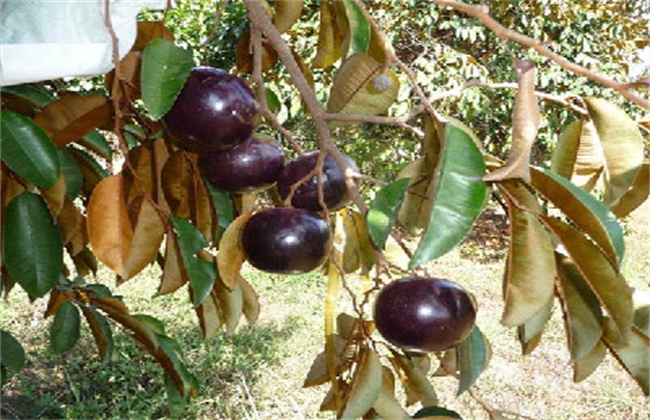
1. Site Selection and Orchard Establishment
The star apple has no strict requirements for soil and can be planted on flat land or hillside land with convenient drainage and irrigation and medium fertility. Before planting, weed control should first be carried out, then deep ploughing and harrowing with mechanical farming equipment, while also setting up drainage facilities. When planting, a plant spacing of 4m×5m or 4m×4m is appropriate. The planting hole specifications are 1m in length and width and 80lm in height, then apply 10-20 kg of farmyard manure, 1 jin of lime, and 2-3 kg of superphosphate per hole as base fertilizer, mix well with soil and backfill. When planting, select robust seedlings of 2 years or older. When planting, place the seedling into the hole and hold it upright, fill with soil and press firmly, water thoroughly with settling water in time, and cover the tree disk with rice straw to reduce water evaporation and improve the survival rate.
2. Fertilizer and Water Management
For young trees, fertilization should be mainly nitrogen fertilizer, adopting the principle of light fertilizer applied frequently, applying nitrogen fertilizer once each in spring, summer and autumn, paired with an appropriate amount of phosphorus and potassium fertilizer. While mature trees consume more nutrients, so organic fertilizer and phosphorus and potassium fertilizer should be appropriately increased. Apply 1-1.5 kg of compound fertilizer per tree each year, and in winter, combined with hole expansion, apply 10-20 kg of organic fertilizer, to promote shoot growth and support fruit development. Pay attention to watering during drought to keep the soil moist, while in the rainy season pay attention to drainage and waterlogging prevention, so as to avoid water accumulation causing root rot.
3. Pruning
In production, dwarfed cultivation is appropriate to improve yield and quality. For young star apple trees, shaping is the main focus, combined with thinning branches to retain 3-5 main branches and remove the remaining side branches, while developing the tree height, gradually cultivating an open-center tree shape, which can bring it into the fruiting period earlier. For fruiting trees, after harvest, pruning should follow the principle of removing strong branches and keeping weak ones, pruning away weak branches, water sprouts, inner canopy branches and overlapping branches, retaining reasonable fruiting branches and appropriately controlling tree height.
4. Pest and Disease Control
The star apple tree has strong resistance to pests and diseases. During cultivation, if fruit flies, aphids, scale insects and sooty mold harm the fruit and leaves, timely control should be carried out. For fruit flies, phoxim emulsifiable concentrate can be sprayed and fly-catching lamps hung to trap and kill them. While the occurrence of sooty mold is mostly caused by the spread of aphids and scale insects, so insects and disease should be treated together, and carbendazim or imidacloprid can be sprayed for control. In addition, attention should be paid to timely clearing fallen leaves and dead branches to reduce sources of pests and diseases, and after clearing the orchard, spray the whole plant once with lime sulfur mixture.
The above is an introduction to star apple planting techniques. We hope it helps you. To learn more related knowledge, please stay tuned to us.