How do you prevent and treat bacterial shot hole disease in peaches?
Bacterial shot hole disease in peaches is a common and widespread disease that harms peaches, and it also harms fruit trees such as cherries, plums and apricots. Some varieties are severely affected, such as Zhonghua Shoutao and Haishuimi. The pathogen mainly harms peach leaves, and also harms the fruit. Warm, rainy weather is the breeding ground for the disease. This kind of disease must be prevented as early as possible and treated promptly. Now let us learn about the harmful characteristics of the pathogen, the symptoms after infection, and the prevention and treatment methods.
I. Pathogen and transmission
The disease is caused only by infection from a short rod-shaped yellow bacterium. The pathogen overwinters in diseased branches, and can be spread by wind and rain and by insects, infecting through natural openings and wounds. It is a rainy-season disease, starting in spring, stopping in drought, and recurring in the heavy rains of summer. Spider mites and densely planted orchards worsen the disease. The pathogen has a latent period with no visible symptoms. It is generally affected by temperature and tree vigor, with a latent period of about one week to one month. The lower the temperature, the longer the latent period; the better the tree vigor, the longer the latent period.
II. Symptoms and signs
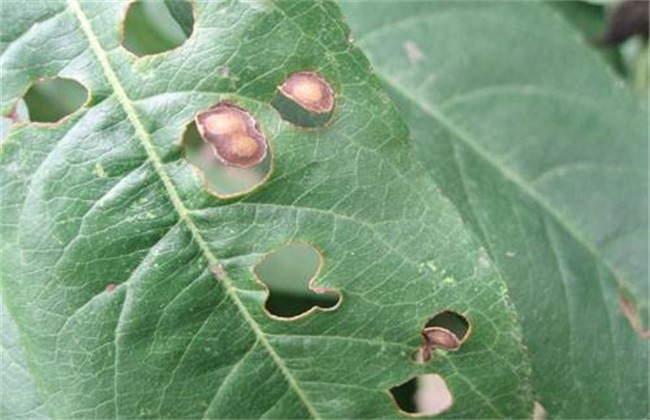
Infection starts on the leaves, beginning at the leaf veins. At first there are small water-soaked spots, which gradually enlarge and become round or irregular in shape. A yellow halo appears, and on sunny days the lesions dry up and fall off, forming holes. When the lesions join together and spread, the leaves drop. When the fruit is affected, small brown spots appear first, then turn black and expand into joined patches, and then the fruit skin splits open.
III. Prevention
It is best to first spray a protective agent such as lime sulfur mixture or Bordeaux mixture before the disease occurs, spraying once a month or every two months. Do not spray many times, as this can affect growth even without disease. When establishing an orchard, do not build it in low-lying land or in a rice paddy. Clean the orchard at all times, and regularly prune dead branches and old leaves. Prune the interior and adjust the growth structure and space, always maintaining the best natural tree shape.
IV. Treatment
When the disease is mild, use naphthaleneacetic acid to regulate and suppress the pathogen. Or use microbial agents to eliminate the pathogen. Generally these agents should be mixed with water into a 400 liquid for spraying. When the disease is severe, reduce the amount of water used for spraying. Generally spray about 4 times, once every week or so. After spraying, promptly prune off diseased branches, diseased leaves, diseased fruit and all other places where the pathogen gathers. Collect them and burn them, and also spray the ground with the agent. Dig ditches and set up drainage channels so that drainage is smooth. Fertilize to strengthen tree vigor and enhance resistance.
When peaches develop bacterial shot hole disease, it affects tree vigor and harms the fruit. It is a widespread and damaging disease that directly affects quality, makes affected fruit unsellable, and also affects growers' income. Therefore it should be taken seriously, preventing the disease and ensuring tree vigor, yield and quality.