A Detailed Explanation of Walnut Propagation Methods and Key Technical Points
Walnut is a nut originating in China. The main propagation methods for walnut cultivation include seed propagation, grafting, and cutting propagation. Among these, cutting propagation is the fastest and easiest way to achieve successful rooting. In addition, seeds must be artificially treated before sowing, otherwise the seed shells are too hard and the seedlings have great difficulty emerging from the soil. The best method is to grow rootstock from seed and then take scions for grafting; this method is the most widely used, does not affect heredity, and can also confer excellent characteristics from other varieties. Let's take a look at the specific details right away.
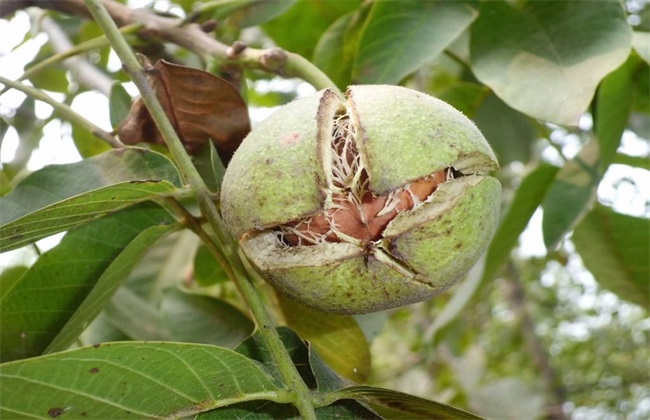
I. Seed Propagation
Sow the collected seeds in spring, or sow in autumn when the temperature is suitable. In spring, March and April are the best sowing periods. The seeds must undergo stratification to promote germination before sowing; direct sowing rarely germinates. The stratification site should be a warm, sunny place, and generally one layer of sand and one layer of seeds are used, maintaining a temperature of 2°C to 5°C. Humidity should be around 60%. After two months of stratification, the seeds can be taken out and sown. Therefore, stratification must be carried out in advance. Alternatively, before sowing, soak the seeds in cold water, soak and press them down, changing the water once a day; after a week, expose them to the sun until the shells crack, and then they can be sown. Sow in holes, place the seeds horizontally, cover with about 6 cm of soil, then water and manage them.
II. Grafting for Seedling Production
Generally, hickory is used as the rootstock; wild hickory has strong adaptability, strong resistance, and sturdy stems. Grafting other varieties onto it can bring fruiting earlier. For scions, select one-year-old healthy branches of medium, sturdy internode length from robust mother plants of excellent varieties, free of pests and diseases. If there are many scions, they can be stored in moist sand. The rootstock should be about 1.5 cm in thickness, and grafting should be done at a position about 10 cm above the ground. After cutting, grafting must be done immediately; bleeding sap affects survival, and the scion can be placed in the mouth to prevent bleeding. The cleft grafting method is generally used. After fixing, check frequently and remove sprouts; after survival, remove the film.
III. Cutting Propagation
Generally, cutting is the fastest method to produce seedlings. Cut one-year-old to three-year-old branches from the outer part of the mother plant, choosing branches about 1.5 cm thick, and take cuttings about 15 cm long; some trimming is also needed, leaving about 10 cm for the final cutting. Keep three to four leaves on the upper part of the branch, then soak the lower end in an alcohol solution of rooting powder, after that insert it into a moist seedbed, cover with pine needles to keep warm, set up a shade net, and keep the temperature between 18°C and 25°C, not exceeding 30°C and not lower than 10°C. Later maintenance is also needed.
IV. Precautions
For sowing, note that as long as the shell can be cracked open without damaging the inside of the seed, any method may be used, as long as it promotes germination and breaks through the seed shell. For grafting, better rootstock or scions can be selected, as long as the plant can simultaneously have better growth characteristics. In the early stage of cutting, there are no roots, so moisture must be maintained to keep the cutting branch vigorous, but not too much, which would cause the lower end to rot and prevent rooting.
Compared with other fruit trees, walnut propagation is relatively difficult no matter which method is used, so more methods should be used to assist propagation. However, all three methods have their own advantages, so the choice depends on one's own situation, and the growth and propagation method should be decided according to time and requirements.