What causes premature aging in grapevines? A detailed guide to prevention and control methods
Grapes are one of the more popular berries on the market. In recent years, market demand has continued to grow, drawing many farmers to cultivate them. However, premature aging of grapevines often occurs during cultivation. So what causes premature aging in grapevines? How should it be prevented and controlled? Let's find out together.
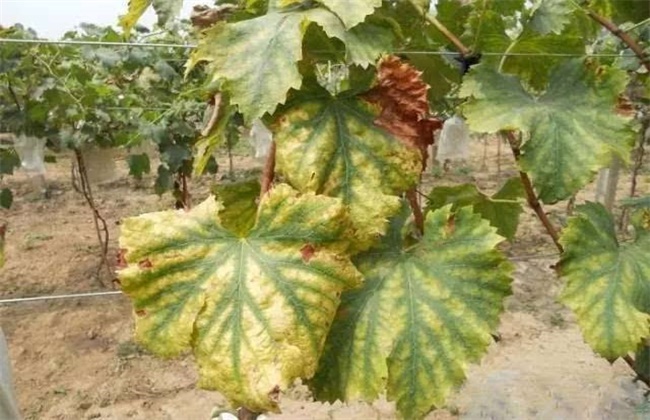
I. Causes of premature aging in grapevines
1. Improper pruning
If the main cane is left too long when pruned, the tendency to race ahead is severe, and no attention is paid to cultivating and renewing the fruiting branches at the rear, the retained branches grow too long and aeration and light penetration are poor. Over time, the fruiting branch groups at the rear die off. Once the main cane extends beyond the trellis surface and there are no backup branches at the rear, it cannot be cut back, and premature aging occurs.
2. Overloading with fruit
Too many fruiting branches are retained, aeration and light penetration are poor, and no attention is paid to limiting the number of clusters and fruits, causing an imbalance between the aboveground and belowground nutrition. This is especially true in the rainy season, when water accumulates easily, leading to insufficient soil oxygen and causing root rot and dead roots. Fruit quality declines, leaves drop early, dead branches become severe, and sometimes leaf yellowing appears and does not recover for ~3 years; in severe cases the vine dies.
3. Improper fertilizer and water management
Improper fertilizer and water management is also one of the causes of premature aging. Many fruit growers emphasize nitrogen while neglecting phosphorus and potassium, and emphasize chemical fertilizers while neglecting organic fertilizers; they emphasize topdressing while neglecting base fertilizer. Applying excessive nitrogen fertilizer during the growing period while neglecting the combination of nitrogen, phosphorus and potassium, and pursuing only quick-acting fertilizers while ignoring the role of base fertilizer and organic fertilizer, leads to declining fruit quality and also causes the canes to grow excessively, consuming large amounts of nutrients and inhibiting the sprouting of basal buds. In addition, irrigating too many times can also cause the plants to grow leggy, with dense, closed foliage, worsening pests and diseases, aggravating the decline in tree vigor, and resulting in premature aging.
4. Poor pest and disease control
The spread of diseases such as black pox and anthracnose causes severe fruit rot, leading to a significant drop in quality and yield. In addition, when pest damage is severe, the tree's stored nutrients become insufficient, the sprouting rate declines, effective branches are reduced, tree vigor declines, and yield losses are severe.
II. Prevention and control methods
1. Prune reasonably
Generally, the extension cane of the main cane should not be pruned too long; the length generally should not exceed 50-60 cm, so as to maintain the growth advantage of the lower branches and improve photosynthetic efficiency. Also pay attention to the cultivation and renewal of fruiting branch groups. Generally, the main cane must be renewed once every 3-4 years to avoid bare lower sections.
2. Retain branches and fruits reasonably
As for the number of fruits retained on the tree, generally 2 clusters are retained on strong branches, while 1 cluster or none is retained on weak branches or renewal branches. The number of branches retained is closely related to yield, quality and growth vigor. If too many branches are retained, the plant is overloaded and aeration and light penetration are poor, which easily causes flower and fruit drop and low quality. Therefore, retain branches and fruits reasonably, do not be greedy for fruit, and achieve high yield and high quality while eliminating the alternate bearing phenomenon.
3. Strengthen management
When fertilizing, apply more organic fertilizer and compound fertilizer, reduce nitrogen fertilizer application, and improve the drainage and irrigation system to facilitate drainage and reduce waterlogging, thereby improving tree vigor.
4. Strengthen pest and disease control
In late March of early spring, spray the whole orchard with lime sulfur mixture, which can provide excellent disease and pest prevention. During the growing period, spray Bordeaux mixture, chlorothalonil, thiophanate-methyl and others in alternation to effectively control cane blight, white rot, downy mildew and so on. At the same time, for pests, scrape and coat old bark, cut and coat diseased shoots, clean up diseased leaves and diseased fruits, and burn them in a concentrated manner to reduce pest sources.
The above is an introduction to the causes of premature aging in grapevines and the prevention and control methods. We hope it helps you. To learn more related knowledge, please stay tuned to us.